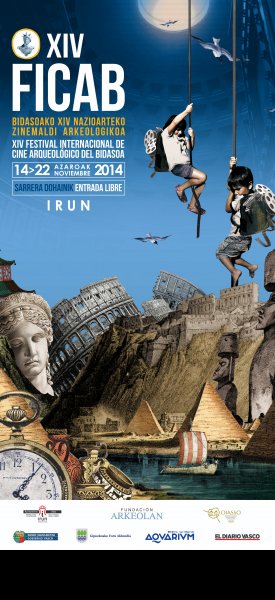
14th International Archaeological Film Festival of the Bidasoa
Awards
-
Grand Prize of the Festival: " The frozen sarcophagus of Mongolia" by Cédric Robion.
-
Special Audience Prize: " Dance of the Maize God" by David Lebrun.
-
Arkeolan Prize for Contribution to Science: " Arles-Rhône 3: from the river to the museum" by Lucas Reboul.
We are, to a large degree, what we remember, since this is ultimately what we have learned. Our own self has room for countless scenes experienced first-hand, either directly or indirectly. These are accompanied by sounds and by voices, and we even associate them to flavours and smells. And there is not a single person who does not have scenes from films which touched them inside etched into their memories.
In film we have visited the romance of Paris, the jeweller’s shops on Fifth Avenue or the mangroves of the coast of Florida; we have accompanied Gandhi in his pacifist epic, Mozart in his wonderful musical creations, along with Marie Curie and other universal individuals. Cinema has given us the references to revisit the comfort of Victorian mansions, the horror of war, the fear of calamities and disasters, illness and practically any manifestation of human personality, both individually and collectively.
When talking about archaeological film, we are referring to a genre which leaves fiction to one side in order to focus on the presentation of facts related to the past. But it uses the same tool, namely moving images selected either for their beauty or because they respond to the need to recount a specific story, with its pauses, its rhythm… its melody.
technical information
FICAB XIV
Year: 2014
Data:: 14th-22nd of November
Projections:
Friday 14th: Aquarium. Donostia-San Sebastián
Monday 17th, Tuesday 18th, Wednesday 19th and Thursday 20th: Amaia KZ. Irun
Friday 21th: FICOBA. Irun
Closing ceremony Saturday 22nd 22: Museo Romano Oiasso
Free admission
The films
will be projected on their original version with subtitles in Spanish
Screening times are approximate
Download program (just texts) in pdf
Organising Committee
Belén Sierra. Delegada de Cultura del Ayuntamiento de Irun.
Patxi Presa. Director
del área de Cultura y Deportes del Ayuntamiento de Irun.
Jokin Ormazabal. Técnico de Cultura del Ayuntamiento
de Irun.
Cristina Aguirre. Gerente del Museo Romano Oiasso
Direction
Mertxe Urteaga. Director of the Oiasso Roman MuseumSecretary
María José Noain Maura. Head of Activities of the Oiasso Roman Museum
Jury
Chairman:
Juan Santos Yanguas. Professor of Old History in the Basque Country University
Vocals:
Angel Illaramendi. Compositor.
Sergio
Laburu. Photographer and director.
Gilles
Parent. Archaeologist and member of EuskoArkeologia.
Carlos Sanz. Archaeologist and Professor of the University of Valladolid.
- PROGRAM
Friday, 14 November 2014
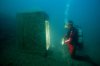
18:30. Egypt´s Sunken City: a legend is revealed. Production: Hoferichter & Jacobs GmbH. Direction: Tenhaven, Jan. Alemania, 2012, 52. Language: Inglés.
19:20. Arles-Rhône 3: from the river to the museum. Production: Kaleo. Direction: Reboul, Lucas. Francia, 2013, 30. Language: Francés.
Year 2004; covered by sediments from the river, a boat emerges from the Rhone, thanks to the complex work of an interdisciplinary team which included archaeologists, restorers and divers. Until then, nobody could imagine that one of the best conserved vessels from Roman times would see the light of day. Along with it, a fascinating collection of archaeological materials which tell us about river navigation in ancient times.
19:50. Operation Lune: the buried wreck of the Sun King. Production: ARTE France. Production: Grand Angle Productions. Direction: Perazio, Vincent Direction: Guerin, Pascal. Francia, 2012, 85. Language: Francés.

The “Lune” was shipwrecked offshore around Toulon in November 1664, on its return from an expedition to the coast of North Africa, with a thousand men on board. Under pressure from Louis XIV, the Sun King, and his entourage, the tragedy was covered up and the boat was forgotten about. It was discovered in 1993 at a depth of 90 metres, thus making the work of archaeologists extremely difficult. But now, 20 years on, new technologies have meant the ship can finally be explored through a combination of scientific knowledge and amazing technological devices.
Monday, 17 November 2014
19:00. Festival opening ceremony
19:30. Unburying the past. Production: National Film Development Corporation Malaysia (FINAS). Direction: Rahman, Harun. Malasia, 2009, 46. Language: Inglés.
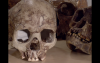
The archaeological heritage of Malaysia dates back more than a million years. Over the last two decades, the people and their ancient cultures have attracted interest from other countries through exhibitions and reports. This documentary explores the most important sites found here, including the discovery of the Perak Man, which is the oldest near-complete human skeleton in Southeast Asia, and probably the oldest example of a congenital deformity.
20:15. Australia, the adventure of the first human beings: the major floods. Production: ARTE France. Production: Contact Films. Direction: Butler, Martin Direction: Bentley, Dean. Francia, 2012, 53. Language: Inglés.
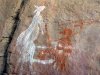
15,000 years ago, water from the thaw covered 15% of the Australian continent, cutting off territories such as New Guinea and Tasmania. This separation of territories had a significant impact on the diet, language, culture and science of the inhabitants of Tasmania. The documentary explores Australia’s ancestral past through archaeological discoveries and the oral tradition of aborigines, which is still present today.
21:10. Guam: the ocean oasis. Production: Archaeological Legacy Institute. Direction: Greyhavens, Teal. Estados Unidos, 2013, 26. Language: Inglés.

Tuesday, 18 November 2014
18:30. Archaeological trip in Corrèze. Production: Court-Jus Production. Direction: Geoffroy, David. Francia, 2013, 14. Language: Francés.
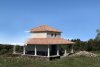
The French region of Corrèze has an important Roman archaeological heritage. The documentary explores the major shrines and tombs found in the area through the use of aerial photographs and 3-D recreations, which help us to better understand settlers’ religion in this region at the time.
18:45. The frozen sarcophagus of Mongolia. Production: ARTE France. Production: Agat Films. Direction: Robion, Cédric. Francia, 2013, 53. Language: Francés.
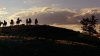
A Franco-Mongolian archaeological expedition discovered the tomb of a 2300-year old Scythian warrior on the frozen steppes of Mongolia. Combining the results of excavations and ethnoarchaeology, archaeologists question the similarities between the current populations of Kazakh nomads and the Eastern Scythians, who inhabited these same lands some 2000 years ago.
19:35. City of the sunken gods. Production: Media Promocja. Direction: Cozac, Zdzislaw. Polonia, 2013, 44. Language: Inglés.

Wolin is a small Polish town on the Baltic coast which is associated with ancient legends. One such legend speaks of the thriving city of Wineta, which is now under water; another tells the story of a Viking fortress called Jomsborg, which appears in ancient Scandinavian sagas. Over recent years, archaeological excavations have meant these legendary accounts can be compared to reality. In this film we have the opportunity to know the results of such research and, thanks to the virtual reconstructions and historical recreations, see medieval Wolin for ourselves.
20:20. Xochicalco, altar to time. Direction: Ortega, Alicia Direction: . México, 2014, 12. Language: Náhuatl.
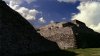
The Mexican site of Xochicalco flourished between the 7th and 10th centuries A.D. Its stone monuments tell of a prosperous city, which we will discover in a poetic way through the voice of a narrator who, in Nahuatl, the language spoken by the Aztecs, will present the mythology of the pre-Columbian cultures of Central America.
Wednesday, 19 November 2014
18:30. Sounds of the Stone Age. Production: Petrus van der Let Filmproduktion. Direction: Petrus van der Let. Austria, 2014, 44. Language: Alemán.

19:15. Passage into History. Production: Imagina AE. Direction: Lapatas, Yiannis V. . Grecia, 2014, 67. Language: Inglés.
In Ancient Greece, the Panhellenic Games were sports competitions which brought together representatives of all Greek cities and had a religious base as well as significant political content. Although the most well-known are the Olympic Games, the city of Nemea also hosted these events. Professor Stephen Miller has spent more than 40 years excavating this archaeological site, during which time he has uncovered remains as important as those of the stadium, where the races were held. Indeed, he has gone further than just contributing to scientific research, and has brought the site back to life by organising new games which aim to recreate those which took place 2300 years ago.
20:20. Mysteries of the Ancient Architects. Production: Camera One. Direction: Warriner, Gray . Estados Unidos, 2013, 60. Language: Inglés.

These huge land structures with geometric forms were built around 2000 years ago in the Ohio River Valley, now part of the United States. They were all designed with great precision to form squares, circles and octagons. They also use a standard unit of measurement. Archaeologists believe that their construction is related to Hopewell culture, and have established that these structures served as an astronomical calendar.
Thursday, 20 November 2014
18:30. A past with a future: from archaeology to world heritage site. Production: Universidad Complutense de Madrid. Direction: Castillo, Alicia. España, 2014, 61. Language: Castellano.
What is Archaeology? What is heritage? There is a big difference between what experts and other persons in charge understand by heritage management and what society in general perceives or appreciates. The sites declared as World Heritage by UNESCO are the most evident proof of the importance the past can have on the present. But the work which goes into Cultural Heritage, especially from an archaeological perspective, is virtually unknown to the general public.
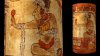
18:30. Dance of the Maize God. Production: Night Fire Films. Direction: Lebrun, David. Estados Unidos, 2014, 96. Language: Inglés.
Friday, 21 November 2014
18:30. The kingdom of salt. 7000 years of history in Hallstatt. Production: Diputación de Alicante. Departamento de Imagen. Direction: Rodes Sala, Domingo. España, 2013, 22. Language: Castellano.
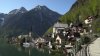
Hallstatt is a small town in the heart of the Austrian Alps. Since ancient times its existence has been linked to the exploitation of rock salt from the mountains, an activity which has been going on for centuries. However, it is its archaeological importance for European prehistory that has given it worldwide fame and prominence, leading to it being declared a World Heritage Site by UNESCO in 1997.
18:50. After the old iron. Production: Elhuyar Fundazioa. Direction: Zubia, Bego. España, 2014, 29. Language: Castellano.
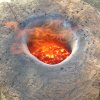
From the Iron Age to the 14th century, iron was produced in hillside forges and furnaces using just manual force. Hundreds of such forges have been catalogued in the Basque Country and, although they have been described in detail, the technique used in these furnaces is still not fully understood. In their search to recover this former means of production, archaeologists are using Experimental Archaeology and are reproducing the work process followed in the haizeola furnaces.
19:20. Aqueducts. Production: Digivision. Direction: Muñiz, José Antonio. España, 2013, 57. Language: Castellano.
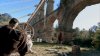
Engineering was one of the fields in which the Romans excelled. Thanks to their mastery of topography and construction they were able to build hugely impressive works, most notably aqueducts. This documentary puts the audience in the shoes of an engineer in charge of building one of these aqueducts, helping them to, through cutting-edge computer graphics combined with actual images, understand the technical resources which made these spectacular ancient water systems possible.
20:20. Road to Petra. Production: Media Venice Comunicazione. Direction: Castellani, Alberto. Italia, 2013, 55. Language: Italiano.
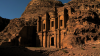
Johann Ludwig Burckhardt arrived in Petra in 1812, the first Westerner to have access to its archaeological treasures. This documentary uses a diary to recreate the journey that led the Swiss explorer to the Nabatean city. Posing as a Muslim traveller, he passed incognito through a number of historical and archaeological sites in Jordan, such as the Roman city of Jerash and the amazing Madaba Mosaic.
Saturday, 22 November 2014
20:00. Prize Award Ceremony + Concert Kamerata Oiasso
Cine Arqueologico del Bidasoa
Museo Romano Oiasso
Eskoleta, 1. 20302 Irun
Tfno.: (+34) 943-63 93 53
E-mail: ficab.oiasso@irun.org
 Facebook