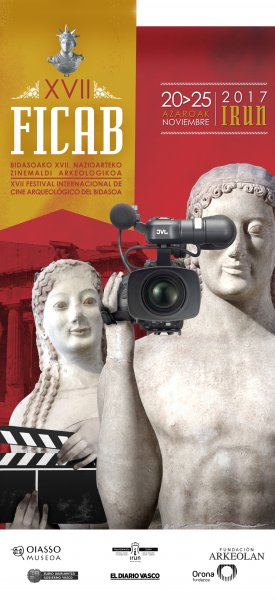
17th International Archaeological Film Festival of the Bidasoa
Awards
-
Grand Prize of the Festival: "Genghis Khan’s tomb, the secret revealed " by Cédric Robion.
-
Special Audience Prize: "Cervantes: the search" by Javier Balaguer.
-
Arkeolan Prize for Contribution to Science: "The British Bronze Age Pompeii" by Sarah Jobling.
- Special Mention of the Jury: "Light under the earth: the destruction of Cholula" by Juan Manuel Ramírez Hermoso.
Every year Bidasoa International Archaeological Film Festival receives an average of 70 competing films from all corners of the world. The selection process is a complicated and complex task which strives to put together a rich and varied programme. The result is divergent: some documentaries last only a few minutes, while others are feature films. Many of the proposals are backed by large producers or powerful research projects, whereas others are small-scale projects which are nevertheless brimming with enthusiasm. They deal with diverse themes, disparate cultures and very different timeframes, although they all share Archaeology as the starting point.
Interestingly, despite the varying
nature of the resulting programme, every year there are certain topics or
issues that converge and stand out. This should not be surprising if we
remember that archaeological research is conditioned in many cases by economic
factors, socio-political interests or epistemological trends that lead to a
wide range of subjects being researched. Indeed in this 2017 edition, even
though the image of the festival takes us to ancient Greece, with those archaic
sculptures peeking out in front of the Parthenon, the classical world is barely
represented. And there are two concerns that appear repeatedly: the Neanderthal
"question" and the cultures of the Far East. While the first case
deals with the controversial issue of coexistence between Sapiens and
Neanderthals or symbolic capacity in Neanderthals, the journey to the confines
of Asia allows us to delve into Genghis Khan, the Mongolian Empire or the
splendours of the Han dynasty.
In addition to Mongolia´s beautiful landscapes, there will be others that are no less exotic, such as those of South Africa or the Brazilian rainforest. However, the FICAB is not just an aesthetic exercise or a process involving playful and visual learning, but rather is a tool for reflection on what Archaeology is and the challenges it currently faces. Does archaeological science have a time limit? Are there historical periods which are "worthier" of being excavated than others? Is antiquity a determining factor in order to qualify a place as archaeological? Is any space in which human beings have left material testimonies susceptible to being excavated? These are the questions raised, almost as a provocation, by one of the competing documentaries, "Soul Skin". The documentary shows a series of archaeologists excavating the set of a 1970s French film, "Donkey Skin", a musical tale directed by the renowned Jacques Demy. This film will be shown in the closing session rather than as part of the competition. Archaeological heritage is not an immutable concept that exists per se, but rather it is we who create heritage from our past, deciding what should or should not be preserved. In this regard, the FICAB offers a rich look at those heritages which, while we may not be able to visit them, can still be experienced first-hand through the fantastic tool we use: cinema.
technical information
FICAB XVII
Year: 2017
Data:: 20th-25th of November
Organising Committee
Juncal Eizaguirre. Delegada de Cultura del Ayuntamiento de Irun.
Josean Ruiz de Azúa. Director
del área de Cultura y Deportes del Ayuntamiento de Irun.
Cristina Aguirre. Gerente del Museo Romano Oiasso.
Direction
María José Noain. Head of Activities of the Oiasso Roman Museum.Educational Section
Itsaso Bikuña. Idoia Castro. Education Department.
Jury
President:Pilar Fatás. Directora del Museo Nacional y Centro de Investigación de Altamira.
Vocals:
Françoise Fontaine. Directora
de Malagne - Arqueoparque de Rochefort, Bélgica.
Asun Lasarte. Directora de producción en
Morgancrea.
Txema Muñoz. Responsable del programa Kimuak,
Filmoteca Vasca.
Francisco Javier San Martín. Doctor en Comunicación Social de la Ciencia e
investigador de la Universidad de País Vasco.
- PROGRAM
Monday, 20 November 2017
19:00. Festival opening ceremony
19:30. The last journey of Infanta Doña Leonor. Production: Visor Audiovisual S.L.. Direction: Cid, Víctor. España, 2016, 25. Language: Castellano.
20:00. Cervantes: the search. Production: Troto Int.. Direction: Balaguer, Javier. España, 2016, 79. Language: Castellano.
Tuesday, 21 November 2017
11:00. In search of the lost future. Production: Turkana Films. Direction: Par, Alfonso. España, 2016, 60. Language: Castellano.

17:00. The Bruniquel Neanderthal. Production: CNRS Images. Direction: Fage, Luc-Henry. Francia, 2016, 8. Language: Francés.
17:10. More than just a mirror. Production: The Oxfordshire Museum. Direction: Woodward, Sharon. Gran Bretaña, 2015, 9. Language: Inglés.

17:20. The traveller from the North. Production: Akhet. Direction: Stevanon, Alessandro. Italia, 2016, 8. Language: Italiano.
17:30. Palermo Museum and its future. Production: Museo Archeologico Antonino Salinas. Direction: Gambino, Davide. Italia, 2016, 12. Language: Italiano.
17:40. The mysterious blocks of Bordeaux. Production: CNRS Images. Direction: Lacharney, Juliette. Francia, 2016, 5. Language: Francés.

17:45. Eye and stone. Production: CNRS Images. Direction: Dalaise, Marcel. Francia, 2017, 38. Language: Francés.
18:25. The forgotten city of Loropeni. Production: CNRS Images. Direction: Baker, Nicolas. Francia, 2016, 7. Language: Francés.
19:00. Neanderthal twilight. Production: YN Productions. Direction: Hope, Rob. Francia, 2015, 52. Language: Francés.

19:50. In the eyes of Cromagnon. Production: Passé Simple. Direction: Azéma, Marc. Francia, 2015, 8. Language: Sin locución.
20:00. The British Bronze Age Pompeii. Production: ARTE France. Production: 360 Productions. Direction: Jobling, Sarah. Gran Bretaña, 2016, 69. Language: Francés.
Wednesday, 22 November 2017
11:00. A history of 29,000 years: imagined recreation of the Lapedo Child's burial. Production: Arqueohoje. Direction: Vilhena, Diogo. Portugal, 2015, 4. Language: Sin locución.

11:05. Handpas. The hands of the past. Production: Libre Producciones. Direction: Camello Manzano, José. España, 2016, 32. Language: Castellano.
11:35. Art on stone. Production: Elhuyar Fundazioa. Direction: Alvarez, Inma Direction: Errazquin, Maddalen. España, 2016, 15. Language: Castellano.
17:00. Soul Skin. Production: Look at Sciences. Direction: Levy, Pierre Oscar. Francia, 2017, 91. Language: Francés.
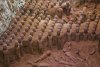
19:00. Genghis Khan’s tomb, the secret revealed. Production: Agat Films. Direction: Robion, Cédric. Francia, 2016, 90. Language: Francés.

Since the 13th century, successive generations of explorers, scientists and historians have been fascinated by an intriguing archaeological mystery: Where is Genghis Khan’s tomb? Documentary sources lead us to think that the remains of the greatest conqueror in history are hidden away somewhere in Mongolia. But what does Archaeology say?
20:30. China, the lost treasures of the Han Dynasty. Production: ARTE France. Production: Lion TV. Direction: Bremner, Ian. Francia, 2014, 52. Language: Francés.
Thursday, 23 November 2017
11:00. Handa and Woopa. Production: Passé Simple. Production: MSK Productions. Direction: Kowalczyk, Stéphane Direction: Rivère, Florent. Francia, 2017, 40. Language: Sin locución.
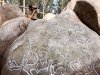
11:40. Outeiro da Chan da Isca. A new petroglyph in Campo Lameiro. Direction: Santiago, Lukas Direction: . España, 2016, 14. Language: Gallego.
11:55. Romanisation, government and territory. Production: Que Cena. Production: Glorybox. Direction: Pereira, Sérgio. Portugal, 2017, 6. Language: Castellano.

By the end of the 1st century B.C., coinciding with the end of the Peninsular Wars and with the Roman administrative organization, Conimbriga became the centre of a vast territory in Portugal. Its location attracted people with new habits and knowledge, leading to an unprecedented level of development. Law and language were fundamental to the emergence of a sense of community and to the reaffirmation of Rome.
12:00. A walk around Nemausus. Production: Passé Simple. Direction: Azéma, Marc. Francia, 2016, 10. Language: Sin locusión.

This contemplative animated film allows us to visit the Roman city of Nîmes through the illustrations of Jean-Claude Golvin, a specialist in restoring ancient monuments. Viewers move through the artist's watercolours, which show the most iconic monuments of the ancient city of Nemausus through 2D and 3D animation techniques: the Tour Magne, the Maison Carrée, the Amphitheatre or the Temple of Diana, to mention just a few.
17:00. The cross and the crown. Production: Media Promocja. Direction: Cozac, Zdzislaw. Polonia, 2016, 52. Language: Castellano.

17:50. Quivira: conquistadors on the plains. Production: Archaeological Legacy Institute. Direction: Greyhavens, Teal. Estados Unidos, 2016, 28. Language: Inglés.
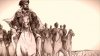
Four centuries ago, Spanish conquerors searched in vain for the riches of the lands of North America, where they found a remarkable American civilisation which would later become forgotten. After reviewing an ancient Spanish document and a long-ignored map, an archaeologist launches an archaeological prospecting project in Kansas in order to test out a new interpretation. The aim: to identify the scene of the Battle of Quivira, between natives and conquerors, in the year 1601.
19:00. My house in Boroo Gol: five Swiss archaeologists in Mongolia. Production: Mongol Production. Direction: Briner, Caroline. Suiza, 2013, 72. Language: Francés.
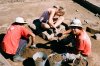
Deep in the Mongolian steppe, without
electricity or running water, five Swiss archaeologists excavated a
2000-year-old settlement, accompanied by researchers from Ulan Bator. The
archaeological campaign immerses us in the daily life of this settlement and
its semi-buried dwellings. It is an immersion in the way of life of both
Mongols today and also the ancient Xiongnus, forming a spatial and temporal
journey for scientists in which they will discover their own identity.
20:10. An amazing discovery in Brazil: the first Americans. Production: Peter Prestel Filmproduktion. Direction: Prestel, Peter Direction: Weisheit, Saskia Direction: . Alemania, 2016, 44. Language: Alemán.
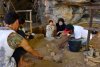
Based on the excavation of hundreds of prehistoric sites in the Brazilian region of Piauí, the Brazilian palaeoanthropologist Niède Guidon suggests settlement in America took place thousands of years before what is currently believed. She has also suggested that the first settlers arrived by boat rather than via the Bering Strait. Although the scientific community has doubted her results for many years, Guidon has nevertheless won the support of several European teams that have come to the conclusion that her theory is indeed correct.
Friday, 24 November 2017
11:00. In search of the perfect curiara. Production: Reto Caribe Films. Direction: Bottome, David. Venezuela, 2016, 12. Language: Castellano.
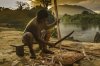
A thousand years ago, Amerindians living in the Lake of Valencia basin in Venezuela sailed on the open sea in wooden canoes called curiaras. They travelled for almost 150 kilometres on single journeys, sailing continuously for 40 hours. An enthusiastic team prepares to recreate the construction and use of these boats. During the process they will discover how the traditional way of making a curiara is in danger of extinction.
11:10. El Castillón. Production: Video Coria. Direction: Asociación Científico-Cultural Zamora Protohistórica. España, 2016, 35. Language: Castellano.
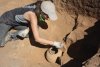
El Castillón is an enclave located on the banks of the river Esla, in the province of Zamora. Archaeological findings to date have highlighted the importance of this enclave, located on the border between the Suebi and Visigothic kingdoms, showing the development and evolution of this village between the 5th and 6th centuries A.D. The research carried out has focused on two fundamental aspects: scientific work and dissemination.
11:45. Light under the earth: the destruction of Cholula. Direction: Ramírez Hermoso, Juan Manuel Direction: . México, 2016, 20. Language: Castellano.
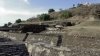
The Government of Mexico develops a shopping mall on the archaeological site of Cholula, jeopardising a hugely important part of local heritage. The unlawful work carried out threatens the preservation of a rich heritage which local inhabitants wish to protect, with many of them suffering from government repression for their opposition to the project.
17:00. Jorge Bonsor's Great Tour. Production: MLK Producciones. Direction: Lobo, Antonio. España, 2016, 67. Language: Castellano.
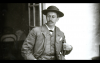
At the start of the 20th century, many European researchers settled in southern Spain as they wanted to be pioneers in the most fashionable science at the time: Archaeology. It was Jorge Bonsor who best embodied this bohemian spirit, passing from trafficker to protector and disseminator of heritage. Following in his steps, we will visit some of the most important sites in Andalusia, such as the Roman necropolis of Carmona, the site of Baelo Claudia, and Mairena Castle.
18:05. Faces of Etruscans. Production: Historia: Associazione per la conservazione e la Divulgazione dei Beni Culturali d’Italia. Direction: Badel, Alan. Italia, 2017, 33. Language: Italiano.
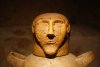
19:00. Dating the origins of art. Production: Passé Simple. Direction: Azéma, Marc. Francia, 2016, 26. Language: Francés.
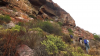
A team of archaeologists from Bordeaux travels to South Africa with a specific goal: to date the oldest vestiges of artistic activity in the history of mankind. Surrounded by magnificent African landscapes, travelling from the Atlantic coast to the shores of the Pacific and from the desert to the tropical forest, we will journey through one of the most ancient territories occupied by Homo sapiens as we search to date the oldest representations of symbolic thought.
19:30. Bonaparte: the Egypt campaign. Discoveries. Production: ARTE France. Production: Docside Zed. Direction: Hourlier, Fabrice. Francia, 2016, 52. Language: Francés.
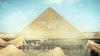
May 1798: Napoleon embarks on his eastern dream and disembarks in Egypt –the cradle of civilization– with a contingent of soldiers, sailors and intellectuals. Once the country was pacified, the so-called "savants" (scientists who accompanied the troops) were finally able to discover the archaeological wonders hidden in the country. However, while the expedition headed south, Syria's military campaign stagnated. After three years of work, the political and military events forced these pioneers of Egyptology to return to France.
20:20. Statues move in Alexandria. Production: Centre d´Etudes Alexandrines. Direction: Collet, Raymond. Egipto, 2016, 34. Language: Francés.
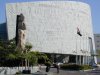
In Alexandria, the statues move. As do the obelisks. The Ptolemy kings, who ruled Egypt in the Hellenistic period, borrowed them to adorn their new capital, in the same way the Roman emperors later did. These millenary stones travelled to Rome, London and New York, where they are found today. However, the city of Alexandria was not only adorned with magnificent statues in ancient times; rather, this tradition has continued to this day, with the statues appearing and disappearing throughout the history of the city.
Cine Arqueologico del Bidasoa
Museo Romano Oiasso
Eskoleta, 1. 20302 Irun
Tfno.: (+34) 943-63 93 53
E-mail: ficab.oiasso@irun.org
 Facebook