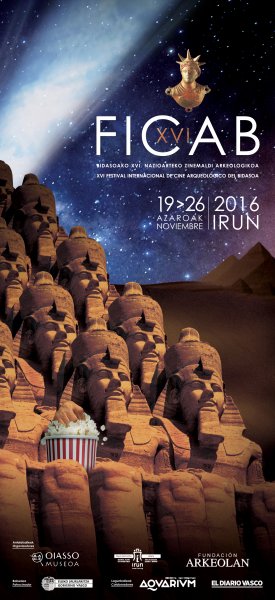
16th International Archaeological Film Festival of the Bidasoa
Awards
-
Grand Prize of the Festival: "Saving Mes Aynak" by Brent E. Huffman.
-
Special Audience Prize: "Saving Mes Aynak" by Brent E. Huffman.
-
Arkeolan Prize for Contribution to Science: "Roman mining technology: the gold of Tresminas" by Rui Pedro Lamy.
Archaeological documentary film covers the
need to maintain the rigour of information, offering as resources attractive
media and discourses supported by real images that easily take us back to the
scenes of the past. However, this unparalleled alternative for science
popularisation has other added values as we will see in this 16th edition of
the Bidasoa International Archaeological Film Festival: as well as the
coordinates of time, the geographical coordinates are also present and they
will take us to remote and exotic places.
What do we know about life in Kabul, the capital
of Afghanistan, after the fall of the Taliban? And the impact of tourism in
Cambodia? Or the identity of the current inhabitants of Panama?
It turns out that archaeological research
is not an isolated bubble of their socio-economic or political environment. And
even less so of the human factor that promotes them. As it happens, the makers
of a number of films in this year´s festival have chosen to show us this added
reality. This way we will have a chance to enter the homes of Kabul, to
discover how the young families live within them and their future prospects. We
will share with the Cambodian authorities their concern for the effects of the
arrival of millions of tourists visiting the temples of the Khmer Empire. We
will also discover the impact of US culture in Panama, the folklore and
traditions of workers in the Valley of the Kings in Egypt, the landscape of
Guatemala and many more of the latest developments.
technical information
FICAB XVI
Year: 2016
Data:: 19th-26th of November
Organising Committee
Organising CommitteeJuncal Eizaguirre. Delegada de Cultura del Ayuntamiento de Irun.
Ainara Martín. Director
del área de Cultura y Deportes del Ayuntamiento de Irun.
Jokin Ormazabal. Técnico de Cultura del Ayuntamiento
de Irun.
Cristina Aguirre. Gerente del Museo Romano Oiasso
Direction
Mertxe Urteaga. Directora del Museo Romano Oiasso
Secretary
María José Noain Maura. Responsable de actividades del Museo Romano OiassoJury
Chairman:Juan Santos Yanguas. Catedrático de Historia Antigua de la Universidad del País Vasco
Vocales:
Gemma Fortea Domènech. Responsable del Área de Actividades y Apoyo a la Investigación
del Institut Català d´Arqueologia Clàssica (ICAC).
Iñaki García Camino. Director del Arkeologi
Museoa (Museo arqueológico de Bizkaia).
Juliette Garcias. Realizadora de documentales de ARTE
France.
Ramón A. Rodríguez Martín. Profesor del Área de Comunicación
Audiovisual de la Universidad de Burgos.
- PROGRAM
Saturday, 19 November 2016
19:00. The disaster of the Basque whalers. Production: Gogoan Ekoizpenak. Production: Suhar Arkeologia. Direction: Tolosa, Eñaut. España, 2016, 80. Language: Euskera.
Off FICAB. Place: Aquarium (Donostia-San Sebastián)
Sunday, 20 November 2016
12:00. Gyptis: a greek Massaliota ship from the sixth century B.C.. Production: Centre Camille Jullian. Direction: Chènè, Antoine. Francia, 2014, 63. Language: Francés.
Off FICAB. Place: Aquarium (Donostia-San Sebastián)
13:00. In search of the Frigate Mercedes. Production: Ministerio de Educación, Cultura y Deporte. Direction: Trueba, Javier. España, 2016, 24. Language: Castellano.
Off FICAB. Place: Aquarium (Donostia-San Sebastián)
Monday, 21 November 2016
19:30. When Homo Sapiens made cinema. Production: MC4. Direction: Azéma, Marc Direction: Cuissot, Pascal. Francia, 2015, 52. Language: Francés.
Official Section. Place: Amaia K.Z. (Irun)
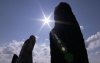
20:20. The enigma of the Great Menhir. Production: MC4. Direction: Sorba, Marie-Anne Direction: Cazenave, Jean-Marc. Francia, 2016, 52. Language: Francés.
Official Section. Place: Amaia K.Z. (Irun)
Tuesday, 22 November 2016
11:00. Experts go back in time: Prehistory of the Homo Sapiens . Production: Doncvoilà Production. Direction: Lyet, Pierre-Emmanuel . Francia, 2015, 4. Language: Francés..

Educational Section. Place: Conference Hall Amaia K.Z. (Irun)
11:05. Antxieta group, passion for Archaeology . Production: Elhuyar Fundazioa. Direction: Leturia, Iñaki. España, 2015, 29. Language: Euskera.
Educational
Section. Place: Conference Hall Amaia K.Z. (Irun)
11:35. Experts go back in time: the Neolithic. Production: Doncvoilà Production. Direction: Lyet, Pierre-Emmanuel . Francia, 2015, 4. Language: Francés.

Educational Section. Place: Conference Hall Amaia K.Z. (Irun)
11:40. Tracing our footsteps: the Gallo-Roman craftsman . Production: Tournez s´il vous plait. Direction: Molia, Agnès Direction: Lutz, Clémence. Francia, 2014, 26. Language: Francés.
Educational Section. Place: Conference Hall Amaia K.Z. (Irun)
17:00. Victoria. Production: Aeschlimann, Erick. Direction: Donoso, Juan Pablo. Chile, 2014, 25. Language: Castellano.
CBA Section. Place: Carlos Blanco Aguinaga Cultural Centre
17:30. Home, sweet trapezoidal home. Production: Faculty of Dramatic Arts & Kvadrat, Belgrade. Direction: Popovic, Nenad. Serbia, 2015, 38. Language: Serbio.
CBA Section. Place: Carlos Blanco Aguinaga Cultural Centre
19:00. Pompey Trophy. Production: Passé Simple. Production: Conseil Départemental des Pyrénées Orientales. Direction: Azéma, Marc Direction: Mattia, Georges. Francia, 2014, 14. Language: Francés.
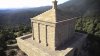
The Pompey Trophy was erected in the Eastern Pyrenees between 73-71 BC, to celebrate the triumph of the Roman general in the Sertorian Wars. Despite the importance of the monument, the interpretation of the ruins is complicated. To facilitate its interpretation, its appearance has been restored using images, which, based on archaeological research, allow its appearance to be recreated.
Official Section. Place: Amaia K.Z. (Irun)
19:15. Wall paintings of the roman necropolis in Cumae. Interdisciplinarity at the service of Archaeology. Production: Centre Jean Bérard. Production: Labez. Production: CNRS Images. Direction: Iannucci, Fulvio. Italia, 2015, 28. Language: Italiano.
Official Section. Place: Amaia K.Z. (Irun)
19:45. Rotunda. Production: Ephorate of Antiquities of Thessaloniki. Direction: . Grecia, 2016, 12. Language: Griego.

On the monument known as the Rotunda of Galerius, located in Thessaloniki (Greece), the restoration has recently been completed after almost forty years of work. The Roman emperor Galerius had this building built as his mausoleum, but he was never buried there. It was converted into a Christian church, at which point the beautiful early Christian mosaics were added, the true focus of this film.
Official Section. Place: Amaia K.Z. (Irun)
19:55. Secret nest of the Dynasty. Production: Media Promocja. Direction: Cozac, Zdzislaw. Polonia, 2014, 44. Language: Inglés.
Official Section. Place: Amaia K.Z. (Irun)
Wednesday, 23 November 2016
11:00. The warrior people of Vasconia. Production: Signo Digital. Direction: Venero, Josu. España, 2015, 58. Language: Euskera.
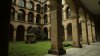
More than 2,000 years ago, in the middle of the Iron Age, the territory of Euskal Herria was inhabited by different peoples, like the Vascones, the Varduli or the Caristii. For a long time, this final stage of Prehistory was a forgotten story. It was thought that these tribes were primitive and nomadic people, but they were actually an advanced and fully developed people, who built walled settlements and were grouped into large towns.
Educational Section. Place: Conference Hall Amaia K.Z. (Irun)
17:00. Helena. Production: Aeschlimann, Erick. Direction: Donoso, Juan Pablo. Chile, 2014, 22. Language: Chile.
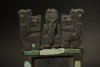
Helena Horta, a specialist in the analysis of pre-Hispanic designs, is currently investigating the meaning of the decoration of the different objects used by the ancient inhabitants of the Salar de Atacama for consumption of hallucinogenic substances. Her analysis has allowed her to make progress in understanding the cosmovision and beliefs of these people.
CBA Section. Place: Carlos Blanco Aguinaga Cultural Centre
17:30. The dawn of the Etruscans. Aspects and evidences of the Villanovan Culture . Production: Istituto per i Beni Artistici Culturali e Naturali della Regione Emilia-Romagna. Direction: Re, Corrado. Italia, 2014, 25. Language: Italiano.
19:00. Discovering the temple of Amenhotep III. Production: Mission des Amis des Colosses de Memnon. Direction: Chènè, Antoine. Francia, 2016, 55. Language: Francés.
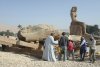
An archaeological excavation, formed by an international team, brings back to life the temple of Amenhotep III in Luxor, one of the most impressive assemblages of the times of the Egyptian pharaohs. The Colossi of Memnon that marked the entrance of the complex were already known, but as the work was carried out they discovered monumental-sized sculptures, more than a hundred representations of Sekhmet, the lioness goddess, sphinxes, royal statues and many other wonders.
Official Section. Place: Amaia K.Z. (Irun)
20:00. Roman mining technology: the gold of Tresminas. Production: Arqueohoje. Direction: Lamy, Rui Pedro. Portugal, 2015, 20. Language: Portugués.

Official Section. Place: Amaia K.Z. (Irun)
20:20. Marly, the Sun King´s lost castle . Production: Gedeon Programmes. Direction: Lossignol, Frédéric Direction: Marmol, Laurent. Francia, 2015, 52. Language: Francés.
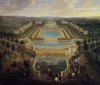 The domain of Marly, located near Versailles (France) has been
subject to further archaeological research. In underground areas of what was
once the castle, evidence has appeared of its decoration and daily life inside,
when it was inhabited in the times of Louis XIV. The monarch took refuge at
this place many times during the final years of his life, to get away from the
pomp of the court. 300 years after his death, these excavations are a unique
opportunity to discover the history of this royal residence.
The domain of Marly, located near Versailles (France) has been
subject to further archaeological research. In underground areas of what was
once the castle, evidence has appeared of its decoration and daily life inside,
when it was inhabited in the times of Louis XIV. The monarch took refuge at
this place many times during the final years of his life, to get away from the
pomp of the court. 300 years after his death, these excavations are a unique
opportunity to discover the history of this royal residence.
Official Section. Place: Amaia K.Z. (Irun)
Thursday, 24 November 2016
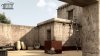
11:00. Virtual reconstruction of the Iberian Temple of La Alcudia de Elche. Direction: Peña Domínguez, Pedro Direction: . España, 2015, 5. Language: .
Educational Section. Place: Conference Hall Amaia K.Z. (Irun)
11:05. Experts go back in time: the Gauls. Production: Doncvoilà Production. Direction: Lyet, Pierre-Emmanuel . Francia, 2015, 4. Language: Francés.
In the third instalment of this animation series, the ancient Gauls are the main focus. Who were the inhabitants of what is known today as France? What did they do and what were their villages like? What can archaeologists find when they excavate a Gallic site?
Educational Section. Place: Conference Hall Amaia K.Z. (Irun)
11:10. Experts go back in time: Roman Gaul. Production: Doncvoilà Production. Direction: Lyet, Pierre-Emmanuel . Francia, 2015, 4. Language: Francés.
The incorporation of the Gallic territories to the Roman Empire gave rise to a mixture of the indigenous culture and the culture imported by the conquerors. This fourth instalment of the animated series "Experts go back in time" provides an insight into Roman Gaul.
Educational Section. Place: Conference Hall Amaia K.Z. (Irun)11:15. The wooden wall. Direction: Loven, Bjorn Direction: . Dinamarca, 2015, 9. Language: Inglés.
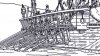
With drawings it presents the naval base and port of Piraeus on which the power of the polis of Athens was based; all in the context of the decisive battle of Salamis, a momentous episode of the Greco-Persian Wars that pitted Greeks against Persians.
Educational Section. Place: Conference Hall Amaia K.Z. (Irun)11:25. Tracing our footsteps: the winegrower. Production: Tournez s´il vous plait. Direction: Molia, Agnès Direction: Lutz, Clémence. Francia, 2014, 26. Language: Francés.
Since the Greek era and especially during Roman times, viticulture spread across Gaul, which was carpeted with vineyards. As wine lovers, the Romans imported their Mediterranean vines but also their farming and winemaking techniques. The Gallic productions were exported across the empire and the volume of production of that time has only been surpassed by modern times. What were the Gallo-Roman winegrowers like?
Educational Section. Place: Conference Hall Amaia K.Z. (Irun)17:00. Flora. Production: Donoso, Juan Pablo. Direction: Chamorro, Andrea. Chile, 2014, 22. Language: Castellano.
CBA Section. Place: Carlos Blanco Aguinaga Cultural Centre
17:30. A gigantic jigsaw puzzle: the Epicurean inscription of Diogenes of Oinoanda. Production: The Middle East Technical University of Ankara. Direction: Güveloğlu, Nazim. Turquía, 2012, 32. Language: Inglés, turco.
The ancient Greek city of Enoanda, in modern Turkey, still holds important archaeological remains. But what really made it famous among archaeologists and historians is an inscription that is considered the largest of the ancient world - it is eighty metres long! Its authorship is attributed to Diogenes of Oenoanda and it contains the most significant parts of Epicureanism, a philosophical current that advocated the search for a happy life through pleasures. The reconstruction of the text, broken into multiple fragments, has become a real puzzle for archaeologists.
CBA Section. Place: Carlos Blanco Aguinaga Cultural Centre
19:00. El Dorado of Panama. Production: Wanda Films. Direction: Novoa, José Manuel. España, 2016, 52. Language: Castellano.
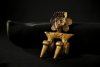
The recent discovery of a sacred necropolis, in the region of El Cano in Panama, where the chieftains of the Coclé culture were buried, has attracted exceptional interest among the international scientific community. This film reveals the history of this enigmatic people, who buried their leaders with stunning funerary objects filled with gold pieces.
Official Section. Place: Amaia K.Z. (Irun)
19:50. Naachtun, forgotten Mayan city . Production: Films A Cinq. Production: Fourchardière, Martin de la . Direction: Bégoin, Stéphane. Francia, 2016, 96. Language: Francés.
Official Section. Place: Amaia K.Z. (Irun)
Friday, 25 November 2016
11:00. Roma outside Rome. Production: Altair4 Multimedia. Direction: Galifi, Pietro Direction: Moretti, Stefano. Italia, 2015, 15. Language: .
Educational Section. Place: Conference Hall Amaia K.Z. (Irun)
11:15. Tracing our footsteps: the Gallo-Roman traveller. Production: Tournez s´il vous plait. Direction: Molia, Agnès Direction: Laville, Nathalie. Francia, 2014, 26. Language: Francés.
With the arrival of the Romans, Gaul witnessed a great development in means of transport that would radically alter society: products circulate, but so do information, beliefs and technology. Travellers, bringers of new developments, actively participate in the unity and wealth of Gallo-Roman civilisation.
Educational Section. Place: Conference Hall Amaia K.Z. (Irun)
11:45. Pompeii: the domus of Julius Polibius. Production: Altair4 Multimedia. Direction: Galifi, Pietro Direction: Moretti, Stefano. Italia, 2015, 10. Language: .
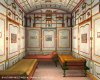
Pompeii is an archaeological site that is always full of surprises and new interpretive proposals. In this case, it is the infographic reconstruction of one of the most important homes: the house of Julius Polybius. This Roman domus comes back to life thanks to the most advanced digital reconstruction techniques.
Educational Section. Place: Conference Hall Amaia K.Z. (Irun)
11:50. Experts go back in time: Early Middle Ages. Production: Doncvoilà Production. Direction: Lyet, Pierre-Emmanuel . Francia, 2015, 4. Language: Francés.

Last episode of this animated series in which, with the help of cartoons, we travel through time in an educational way. The medieval period is the focus and the archaeologists present the most significant aspects of the society of that time.
Educational Section. Place: Conference Hall Amaia K.Z. (Irun)
17:00. Chambord: the castle, the king and the architect. Production: Gedeon Programmes. Direction: Jampolsky, Marc. Francia, 2015, 92. Language: Francés.
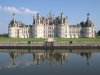
CBA Section. Place: Carlos Blanco Aguinaga Cultural Centre
19:00. The modern discovery of the Country of Magan. Production: Visor Audiovisual S.L.. Direction: Cid, Víctor. España, 2016, 20. Language: Castellano.
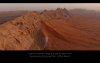
The mysterious and still unknown country of Magan, mentioned in Mesopotamian texts, occupied the current region of Sharjah thousands of years ago. A team led by the Autonomous University of Madrid has been working since 1994 in this territory located in the heart of the United Arab Emirates. Their research has enabled some of the most important historical and archaeological finds from the Middle East.
Official Section. Place: Amaia K.Z. (Irun)
19:20. Saving Mes Aynak. Production: Kartemquin Educational Films. Direction: Huffman, Brent E. . Estados Unidos, 2014, 60. Language: Afgano.
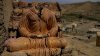
The archaeological site of Mes Aynak in Afghanistan is in serious danger, threatened by Taliban attacks and by the exploitation of a copper mine by a Chinese company. It was only possible to excavate 10% of this unique 2,000-year-old site which has key information to redefine the history of Afghanistan and Buddhism. But the conflict between economic developmentalism, preservation of culture and heritage reaches unanticipated dimensions at this site.
Official Section. Place: Amaia K.Z. (Irun)
20:20. Angkor, between the earth and the sky. Production: Gedeon Programmes. Direction: Horn, Olivier. Francia, 2015, 52. Language: Francés.
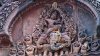
The prodigious stone vestiges of the Khmer empire and its capital Angkor are known to all. But what do we know of the neighbouring populations who inhabited the region between the ninth and fifteenth centuries? What were the daily life, customs and religious beliefs of these people? The extension of Siem Reap International Airport has allowed archaeologists to carry out a preventive excavation that will answer many of these questions.
Official Section. Place: Amaia K.Z. (Irun)
Cine Arqueologico del Bidasoa
Museo Romano Oiasso
Eskoleta, 1. 20302 Irun
Tfno.: (+34) 943-63 93 53
E-mail: ficab.oiasso@irun.org
 Facebook