Awards
Special Audience Prize: "Ingeniería romana: carreteras", José Antonio Muñiz
Orona Fundazioa Prize of the Educational Section: "Twelve decades of discovery", Nikos Dayandas
Arkeolan Prize for Contribution to Science:"Des-extinción", Alfonso Par
technical information
Year: 2020
ORGANISING COMMITTEE
Juncal Eizaguirre.
Delegada de Cultura del Ayuntamiento de Irun.
Josean Ruiz de Azúa.
Director del área de Cultura y Deportes del Ayuntamiento de Irun.
Juanjo Jiménez
Director del Museo Oiasso
Jokin Lanz
Técnico de Actividades
DIRECTION
Aizpea Goenaga
Coordinadora general del Museo Oiasso
EDUCATIONAL SECTION
Itsaso Bikuña. Idoia Castro. Education Department.
JURY:
Mike Dobson
University of Exeter. Honorary higher researcher
Mertxe Urteaga
Archeologist. Historical and Artistic Heritage Department of the Gipuzkoan Regional Government
Javier Trueba
Photographer, director, producer
Cristina Bosch
Audiovisual producer, teacher of ESCAC
Romana Erice
Director of the Culture department of Zaragoza City Council
Carmen Indurain
Philologist, cinematographic and cultural researcher
- PROGRAM
Monday, 16 November 2020
17:00. A Arte rupestre nos Campos Gerais. Direction: Karla Nascimento. Brasil, 2020, 59. Language: Portugués.
19:30. First among equals. Direction: Nikos Dayandas. Grecia, 2019, 10 minutos. Language: Inglés.
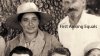 Hetty Goldman was the first American woman to direct her own excavation in mainland Greece in 1910, as well as the first female professor of the Institute for Advanced Study at Princeton, where she became a colleague and a friend of Albert Einstein. She had to fight and persevere in order to become accepted by the male academic establishment. She left a distinct mark in the study of the influence that international trade and communication had in the development of the Eastern Mediterranean world, and helped many younger women advance in archaeology.
Tuesday, 17 November 2020
17:00. Os enigmas do Cabeço da Mina. Direction: Rui Pedro Lamy. Portugal, 2019, 27 minutos. Language: Portugués.
17:30. Arqueomanía: Pirineos. Direction: Navarro, Manuel Direction: Pimentel, Manuel. España, 2020, 28. Language: Castellano - Gaztelania.
19:00. À la rencontre de Neandertal. Direction: Cuissot, Pascal Direction: Hope, Rob. Francia, 2019, 52. Language: Francés - Frantsesa.
 Long before the arrival of Homo sapiens, the Neanderthals wander the vast European plains regularly drowned into the Ice Ages. Several discoveries, in France and England, and especially on the island of Jersey, now allow the archaeologists to understand the lifestyle of those first great nomads of Europe, that lasted 300 000 years.
19:55. Pyramid Builders. New Clues. Direction: Tran, Florence. Francia, 2019, 52 minutos. Language: Inglés.
 Two teams of Egyptologists, one based in the middle of the desert, the other located on the Red Sea coast, are currently discovering more about the Egypt of Khufu’s time, than at the foot of the pyramids. What they found help them figure out how ancient Egyptians worked. Authentic archaeological experiments have been filmed in real time, revealing ancient techniques and methods, unlocking certain secrets of these ancient great builders.
Wednesday, 18 November 2020
17:00. Twelve decades of discovery. Direction: Nikos Dayandas. Grecia, 2019, 13 minutos. Language: Inglés.
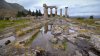 From its’ pivotal role in the colonization of the Mediterranean and the development of complementary industries like pottery and textile manufacture to its’ status as a roman trade hub and an early center of Christian lore, Corinth’s character remained metropolitan in a distinctly Mediterranean fashion for more than a millennium. Placing an emphasis on how people experienced the city in antiquity, the archaeologists have developed new ways of disseminating archaeological knowledge and allowing modern audiences to experience ancient Corinth today
17:15. Arqueomanía: Escuela de gladiadores. Direction: Navarro, Manuel Direction: Pimentel, Manuel. España, 2020, 27. Language: Castellano - Gaztelania.

19:00. Ingeniería romana: carreteras. Direction: Muñiz, José Antonio. España, 2020, 55 minutos. Language: Castellano.

19:55. Ingeniería romana: Tongobriga. Direction: Muñiz, José Antonio. España, 2018, 52 minutos. Language: Castellano.
Thursday, 19 November 2020
17:00. Konto Hona. Direction: Omar El-Mishad. Egipto, 2020, 7 minutos. Language: Árabe.
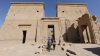 Inspired from the lyrics of a pharaonic song that is engraved on the walls of a temple, written on papyrus and sung by Egyptians over the decades, A soul emits to take a last look at the land of civilization of upper Egypt, moving between creatures to reveal the experience of what it sees between destruction, immortality and coming back to life
17:10. Le refuge oublié. Direction: Geoffroy, David. Francia, 2019, 52 minutos. Language: Francés.

18:30. Deep time crabs. Direction: Peres, Marcello. Italia, 2018, 28 minutos. Language: Inglés.
19:00. Tintin et le mystère de la momie. Direction: Fréderic Cordier. Francia, 2019, 52 minutos. Language: Inglés.
 The mystery of the Rascar Capac mummy" is a scientific investigative documentary which seeks to unveil the mystery of the man behind Hergé's famous mummy. The spectator sets off on a journey of discovery investigating into the pre-Columbian mummies of Chile and Peru which remain among the mysterious treasures of the great museum collections of Europe.
19:00. Arqueomanía: La Marmotta. Direction: Navarro, Manuel Direction: Pimentel, Manuel. España, 2020, 27. Language: Castellano.
19:30. Odysée de la Jeanne Elisabeth. Direction: Azéma, Marc. Francia, 2019, 52 minutos. Language: Francés.
19:55. Mächtige Männer, ohnemächtige Frauen?. Direction: Birgit Tanner Direction: Carsten Gutschmid. Alemania, 2019, 52 minutos. Language: Inglés.
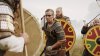 Hunting men, gathering women - that is the picture of prehistory as many of us know it. The man as a hunter was long regarded as the main breadwinner of the family and is said to have been at the top of society from the very beginning of human history. But not every discovery fit into this picture and meanwhile more and more misinterpretations come to light. Stone Age artists, rich princesses from the Bronze Age and axes-swinging Vikings actually existed. Scientific methods, which are usually used in forensics, are helping researchers worldwide to gain new insights.
Friday, 20 November 2020
11:00. Ercolano e Pompei. Visioni de una scoperta. Direction: Pietro Galifi. Italia, 2018, 6 minutos. Language: 0.
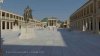 Video for the exhibition held at the National Archaeological Museum of Naples from June 28 to September 30 2018: a journey through the suggestions that the Vesuvian cities, buried by the eruption of 79 AD. and unveiled by the eighteenth-century excavations, have exercised on exceptional artists, who lived between the eighteenth and early twentieth centuries.
17:00. Written in stone
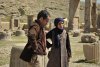
A young woman and her brother trace the history of their ancestors through traditional stone carving in Shiraz, Iran, in the center of the ancient Persian homeland. Their journey takes them to historic sites and monuments, including Persepolis and the Tomb of Hafez, as they pay homage to their father on the anniversary of his death.
17:20. Sauver Notre Dame. Direction: Quentin Domart Direction: Charlene Gravel. Francia, 2019, 52 minutos. Language: Francés - Frantsesa.
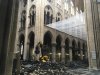 This one hour-long special show recorded the immediate aftermath of the Notre-Dame de Paris’ fire tragedy. With special access on-site, we are embedded with all the highly skilled craftsmen qualified with the know-how needed to prevent the cathedral from collapsing. It captures unique human stories facing extreme situations and bears witness to the progress and challenges of this one life time mission.
19:00. The plight of Arezzo (La questione aretina). Direction: Gaetano Maria Mastrocinque. Italia, 2018, 22 minutos. Language: Italiano.
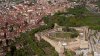 The documentary traces the fundamental historical steps that led Cosimo I De Medici to establish the Medici Fortress on the hill of San Donato in Arezzo. It shows, in an epic and evocative key, how this mighty Renaissance fortification was able to dominate the entire city of Arezzo. Thanks to the reading of the archaeological remains and the places recently returned to light, the Medicean Fortress of Arezzo provides elements and clues that go well beyond the mere Renaissance construction story. It is an investigation of the origins and identity of the millennial history of the city of Arezzo.
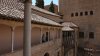
19:25. La Alhambra en juego. Direction: José Sánchez Montes. España, 2020, 70 minutos. Language: Castellano.
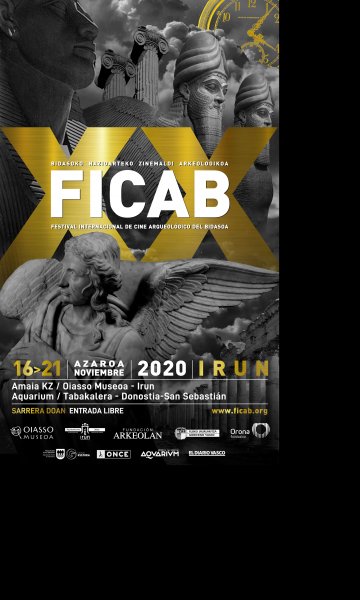
Cine Arqueologico del Bidasoa
Museo Romano Oiasso
Eskoleta, 1. 20302 Irun
Tfno.: (+34) 943-63 93 53
E-mail: ficab.oiasso@irun.org
 Facebook