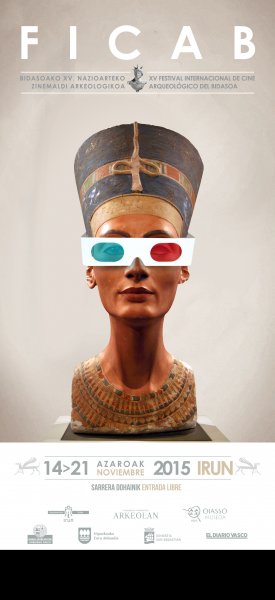
15th International Archaeological Film Festival of the Bidasoa
Awards
-
Grand Prize of the Festival: "Searching for Djehuty: among mummies, tombs and hieroglyphics" by Javier Trueba nad José Latova.
-
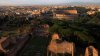
Special Audience Prize: "Secrets of the Coliseum" by Pascal Cuissot.
-
Arkeolan Prize for Contribution to Science: "Petra, capital of the desert" by Olivier Julien.
What if it is true,
as recent research has suggested, that Palaeolithic cave art could have been
designed to be viewed with animations? We are not talking about bison with
double tails, or horses with eight legs, or even goats with two heads, but
about images expressly designed, with the help of intermittent lights, to allow
horses to gallop, bison to move their tails or goats their heads. According to
this interpretation, which seems to be well argued, practically at the time of
the dawn of our species, they seem to have invented cartoons using the
principle of breaking down movement. With a little imagination, we can picture
those people together in the caves, taking advantage of the pleasant
temperature underground compared to the harsh outdoor conditions, in order to enjoy
a show in which the stars were the animals so splendidly portrayed on the
walls.
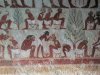
The fact is that a journey through the History of Art is peppered with examples in which images are used to support narrative and are also used in fully determined sequences to recount the events. The figurative representations on the Egyptian tombs are organised in such a way as to follow a linear and chronological path in the form of bands. And to avoid losing the thread of the story, they rely on other resources, such as coded sizes of the figures, larger for gods and pharaohs, and smaller for the slaves; colours, red for male skin and yellow for female skin, etc. Another scenario on this journey is that of Greek ceramics painted with figures; as most of them are round, when the piece is rotated the cycle of the scenes can be followed: Ulysses tied to the mast of the ship, the sirens who want to put a spell on him with their songs, representations of palaces on the coast. This makes it easy to follow the sequence and order of events, concluding that the main character passed this test with flying colours. And what about the dark room in the Sanctuary of Dydyma in Greece where the priests deceived pilgrims by cloaking them in a psychedelic atmosphere worthy of Hollywood studios.
It seems that our human personality has associated with it the creative genius that leads us to construct stories with images endowed with movement in one way or another. The Lumière brothers’ cinematograph, patented in 1895, allowed us to unleash this ability and develop it to unexpected limits. Through this gradual evolution, we are also offered the chance to bring the past and its people closer to us, as will be seen in this 15th edition of the International Archaeological Film Festival of the Bidasoa.
technical information
FICAB XV
Year: 2015
Data:: 14th-21st of November
Screenings:
Friday 14th and Saturday 15th: San Telmo Museoa. Donostia-San Sebastián
Sessions 11:00 a.m. and 7:00 p.m.: Amaia KZ. Irun
Sessions 5:00 p.m.: CBA. Irun
Closing ceremony Saturday 21st, 8:00 p.m.: Oiasso Roman Museum. Irun
Free admission
All films will be shown in the
original version with Spanish subtitles except for "Aigues Mortes and the
crusades of Saint Louis King of France" and "Uncovering the Victory
of Samothrace", which will have Basque subtitles.
Screening times are approximate
Organising Committee
Organising CommitteeJuncal Eizaguirre. Delegada de Cultura del Ayuntamiento de Irun.
Ainara Martín. Director
del área de Cultura y Deportes del Ayuntamiento de Irun.
Jokin Ormazabal. Técnico de Cultura del Ayuntamiento
de Irun.
Cristina Aguirre. Gerente del Museo Romano Oiasso
Direction
Mertxe Urteaga. Directora del Museo Romano Oiasso
Secretary
María José Noain Maura. Responsable de actividades del Museo Romano OiassoJury
Chairman:Juan Santos Yanguas. Catedrático de Historia Antigua de la Universidad del País Vasco
Vocales:
Marc Azéma. Doctor en Prehistoria y
especialista en arte
paleolítico.
Paloma García. Directora de los Museos Arqueológicos de Gijón.
José Luis Rebordinos. Director del Festival Internacional de Cine de
Donostia-San Sebastián.
Luis Sanz. Productor de contenidos
audiovisuales educativos y documentales en la Universidad de Valladolid.
- PROGRAM
Saturday, 14 November 2015
12:00. The true story of ‘The raft of the Medusa’. Production: Grand Angle Productions. Production: ARTE France. Direction: Jollon, Herlé. Francia, 2014, 90. Language: Francés.
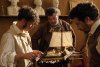
17:30. Aigues Mortes and the crusades of Saint Louis the king. Production: Gedeon Programmes. Direction: Lefebvre, Xavier Direction: Fontana, Benjamin. Francia, 2014, 52. Language: Francés.
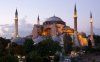
19:00. X-ray of Hagia Sophia. Production: ARTE France. Production: ZED. Production: Providence Pictures. Production: Nova-WGBH. Direction: . Francia, 2014, 87. Language: Francés.
Sunday, 15 November 2015
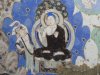
12:00. The mysteries of Turfan. Direction: Direction: Wedel, Carola. Alemania, 2014, 45. Language: Alemán.
19:00. Uncovering the Victory of Samothrace. Production: Gedeon Programmes. Production: ARTE France. Direction: Garcias, Juliette. Francia, 2015, 52. Language: Francés.
Monday, 16 November 2015
19:00. Festival opening ceremony
19:30. Petra, capital of the desert. Production: ARTE France. Production: ZED. Production: Providence Pictures. Production: Nova-WGBH. Direction: . Francia, 2014, 80. Language: Francés.
Tuesday, 17 November 2015
11:00. Evolution. Production: Escuelab. Direction: Devitto, Facundo Direction: Ruiz, Begoña. España, 2014, 13. Language: Castellano.
11:45. Movie language in Egypt. Direction: Bocktor, Genevieve. Egipto, 2013, 19. Language: Árabe.
17:00. The truth about the Knights Templar. Production: Gedeon Programmes. Direction: Pradinaud, Mathieu. Francia, 2013, 52. Language: Francés.

19:00. Cave art. Production: Diego, Enrique. Direction: Diego, Enrique. España, 2015, 7. Language: Castellano.
19:10. The Sign, Prehistoric Rock Art. Direction: Direction: Yung-Hoon, Lee. Corea del Sur, 2015, 48. Language: Coreano.
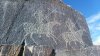
20:00. Searching for Djehuty: among mummies, tombs and hieroglyphics. Production: Madrid Scientific Films. Direction: Trueba, Javier Direction: Latova, José. España, 2015, 55. Language: Castellano.
Wednesday, 18 November 2015
11:00. Tracing our footsteps: citizens. Production: Tournez s´il vous plait. Direction: Molia, Agnès Direction: Laville, Nathalie. Francia, 2014, 26. Language: Francés.
11:30. La Olmeda, a roman villa. Production: Diputación de Palencia. Direction: Diputación de Palencia. España, 2011, 8. Language: Castellano.
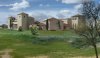
Discovered in 1968, the Roman Villa of La Olmeda is one of the most important archaeological sites in the Hispano-Roman world. It is a large mansion from the Late Empire period (4th century A.D.), the main building of which is arranged around a central courtyard onto which the various rooms open, most of them with extraordinary mosaic floors. This short film takes us on a tour of this Roman villa situated in Palencia, and gives its historical background.
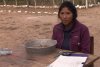
11:40. El Cardonal dig, Archaeology in the Andes. Direction: Direction: Vercesi, Luciano. Argentina, 2014, 34. Language: Castellano.
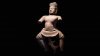
17:00. Stolen warriors. Production: Luckfilm. Direction: Luck, Wolfgang. Alemania, 2014, 52. Language: Inglés.
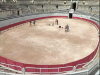
19:00. Verona, an open city. Production: Centro Studi Archeologici. Direction: Peres, Marcello Direction: Tagliabue, Nicola. Italia, 2015, 41. Language: Italiano.
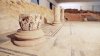
The Italian city of Verona has an important Roman past, the remains of which are interwoven into its current layout. Through spectacular aerial views and a detailed analysis of the most significant elements, we can study in depth the Verona of 2000 years ago. And we will thus get to know the famous Verona Arena, in reality an amphitheatre, the Stone Bridge, the Gavi Arch and the monumental gateways, plus an unusual look at underground Verona.
19:40. Roman engineering: cities. Production: Digivision. Direction: Muñiz, José Antonio. España, 2015, 55. Language: Castellano.

This episode of the TV series on Roman Engineering tells how Rome was model for the foundation of the rest of the cities of the Empire. We will find out how the decision regarding the location of the city was made and we will see the rites, the marking out of the perimeter, the division into plots and the distribution between settlers. Accompanied by this information, we will witness the art of creating cities, reflecting on the points they have in common and their differences.
Thursday, 19 November 2015
11:00. Cannington bypass Archaeology. Direction: Direction: Owen, Justin. Gran Bretaña, 2014, 23. Language: Inglés.
11:30. Tracing our footsteps: medieval lords. Production: Tournez s´il vous plait. Direction: Molia, Agnès Direction: Laville, Nathalie. Francia, 2014, 26. Language: Francés.
17:00. Lecture by Marc Azéma and presentation of the book The Prehistory of the Cinema
:.
19:00. A mad idea from Nero . Production: CNRS Images. Direction: Rambaud, Paul. Francia, 2014, 11. Language: Francés.
19:10. Secrets of the Coliseum. Production: ARTE France. Production: ZED. Production: Nova-WGBH. Production: Providence Pictures. Direction: Cuissot, Pascal. Francia, 2014, 85. Language: Francés.
Friday, 20 November 2015
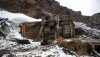
17:00. Punta Linke, the memory. Production: SAP Società Archeologica. Direction: Chiodarelli, Paolo. Italia, 2014, 62. Language: Italiano.
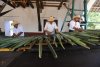
19:00. Agave is life. Production: ArcheoProductions. Direction: Brown, David. Estados Unidos, 2014, 60. Language: Inglés.
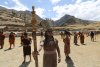
20:00. Chavín de Huantar. The theatre of the afterlife. Production: Wanda Films. Direction: Novoa, José Manuel. España, 2015, 52. Language: Castellano.
Saturday, 21 November 2015
20:00. Prize Award Ceremony + Concert Kamerata Oiasso
Cine Arqueologico del Bidasoa
Museo Romano Oiasso
Eskoleta, 1. 20302 Irun
Tfno.: (+34) 943-63 93 53
E-mail: ficab.oiasso@irun.org
 Facebook