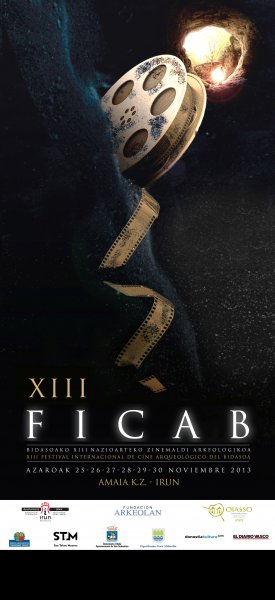
13th International Archaeological Film Festival of the Bidasoa
Awards
-
Grand Prize of the Festival: "Dispute at the dam" by Jean-Luc Bouvret.
-
Special Audience Prize: " The passion of remembrance: the world of Arslantepe" by Isabella Astengo.
-
Arkeolan Prize for Contribution to Science: "Isle of princes" by por Zdzislaw Cozac.
In our bags and pockets we carry increasingly smaller, more powerful and higher resolution video cameras. If anything has changed in recent years, it is the ways that we communicate. From telephone booths on every corner of every block, we have moved onto handheld mobile phones and smart phones that allow us to know how frequently the city buses will run, to tune in to a TV channel, to chat, use them as diaries, calculators, for Internet access, as a book, a radio, recorder, music file, photograph or video camera, as well as much more. Our eyes are tuned into these revolutionary terminals; they capture and keep what our feelings and emotions select: a baby’s first steps, first words, a spectacular sunset, celebrities strolling incognito, ruins and works of art, as well as monuments. To summarise, we can file what we find of interest and later edit it, assemble it, add music, text, and launch it into cyberspace if we wish.
Archaeology is no stranger to this situation; archaeologists and their excavations have rising opportunities to record their discoveries and research processes. The audiovisual media are increasingly used as a means for communicating and broadcasting their work. This new orientation is clearly palpable in this thirteenth edition of FICAB. From New York’s Metropolitan, one of the world’s most important museums, to the team working at the Murumendi site, in Beasain, many have resorted to the documentary format to transmit their message about our archaeological heritage. The stained glass windows of the Sainte Chapelle in Paris, the Palaeolithic engravings of Foz Côa, the Easter Island moais, India’s stitched wooden canoes, Coptic mummies, Tartessos and many other landscapes with remarkable historical echoes parade before our eyes, accompanied by another major graphic revolution of our time: virtual reality.
technical information
FICAB XIII
Year: 2013
Data:: 25th-30th of November
Projections in Amaia Cultural Centre (Irun). Free admission
The films
will be projected on their original version with subtitles in Spanish
Screening times are approximate
Download the program in pdf format
Organising Committee
Belén Sierra. Delegada de Cultura del Ayuntamiento de Irun.
Patxi Presa. Director
del área de Cultura y Deportes del Ayuntamiento de Irun.
Jokin Ormazabal. Técnico de Cultura del Ayuntamiento
de Irun.
Cristina Aguirre. Gerente del Museo Romano Oiasso
Direction
Mertxe Urteaga. Director of the Oiasso Roman MuseumSecretary
María José Noain Maura. Head of Activities of the Oiasso Roman Museum
Jury
Chairman:
Juan Santos Yanguas. Catedrático de Historia Antigua de la Universidad del País Vasco
Vocals:
Javier Fernández
Bordegarai. Técnico arqueólogo del al BIBAT
Arkeologia - Fournier de Naipes Museoa
Tuija Lind. Arquitecta, Responsable del Paisaje
Cultural, Gobierno de Suomenlinna. Helsinki, Finlandia
José Monje. Historiador y Presidente de Luis de Uranzu Kultur Taldea
Eneko Olasagasti. Director y guionista de cine
- PROGRAM
Monday, 25 November 2013
19:30. Voyage to Prehistory. Production: Elhuyar Fundazioa. Direction: Zubia, Bego. España, 2013, 31 minutos. Language: Castellano.
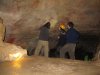
Scientific advances often have interesting applications in the field of Archaeology. This is the case of new techniques for analysing mitochondrial DNA, which can be carried out on human remains from the past. In this case, the University of the Basque Country leads the investigation into the Metal Ages skeletal remains of the Santimamiñe Cave, relating them to the current population of Kortezubi.
20:00. In the footsteps of Provence’s early settlers. Production: Armoni Productions. Direction: Clévenot, Axel. Francia, 2013, 52 minutos. Language: Francés.
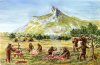
The French region of Provence and the Côte d’Azur offer interesting prehistoric sites that are presented in this film in the form of a travel diary, following an original itinerary to discover the territory’s first settlers. The itinerary also serves to relive the major stages in man’s evolution and to rediscover, in this Mediterranean setting, the footsteps of our past.
20:50. Wine and banquets on the banks of river Duero during its early history. Production: Centro de Estudios Vacceos Federico Wattenberg. Direction: Sanz Mínguez, Carlos. España, 2012, 17 minutos. Language: Castellano.
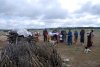
The site in Pintia (Valladolid) has provided plentiful evidence that 2,500 years ago wine was consumed among the Vaccean people in both domestic and funeral settings, thanks to analyses of the organic residues preserved by pottery vessels. Beneath the debris of a home that burned down in the 1st century B.C., the so-called “banquet room” was discovered, which provided a rich set of ceramic pieces designed for food storage and meat and alcoholic beverage consumption.
21:10. Murumendi, from the Iron Age to Antiquity. Production: Suhar Arkeologia. Direction: . España, 2013, 8 minutos. Language: Castellano.
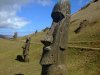
21:20. Easter Island’s pre-historian. Production: Axell Communication. Direction: Axell, Philippe. Bélgica, 2013, 11 minutos. Language: Francés.
Tuesday, 26 November 2013
19:00. Malagne, living in the Roman era . Production: Axell Communication. Direction: Axell, Philippe. Bélgica, 2013, 12 minutos. Language: Francés.
19:10. The Temple of Mercury, a labour for Romans. Production: Court-Jus Production. Direction: Geoffroy, David. Francia, 2012, 10 minutos. Language: Francés.
The Puy de Dôme, emblematic volcano of the Puys mountain range, culminates at a height of 1,464 metres. Its peak shelters the remains of a colossal temple devoted to the god Mercury, the main divinity of the people of the Auvergne during the Roman period. Since its discovery in the 19th century, the temple has undergone numerous excavations and exploration. One of the most recent tells us about the techniques used during its construction.
19:20. Gauls on the plain. Production: Court-Jus Production. Direction: Geoffroy, David. Francia, 2012, 43 minutos. Language: Francés.
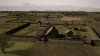
The construction of a school in the Puy de Dôme area provided archaeologists with the perfect opportunity to dig the remains of an indigenous farm, dating back to the 2nd century A.D. This Gallic farm is similar to the one of Pâtural, discovered in the eighties just a few kilometres away. Both sites, which are contemporaries of the Gallic town of Aulnat-Gandaillat, the first capital of the Auvergne people, are testimony to a territorial organisation that was common to all of Gaul.
20:05. Virtual Tour: the Roman Villa of Rabaçal . Production: Museu do Rabaçal. Direction: Madeira, Pedro. Portugal, 2013, 11 minutos. Language: Sin locución.
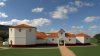
This short film presents a 3D virtual reconstruction of the archaeological site and museum of the Rabaçal Roman Villa in Penela, Portugal: a tour of the different components of this villa, following hypothetical replacements of the constructed heritage, close to the Roman city of Conimbriga.
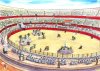
20:15. Amphitheatrum, memoria martyirum et ecclesiae. Production: Instituto Catalán de Arqueología Clásica. Production: Ayuntamiento de Tarragona. Production: Museo Bíblico Tarraconense. Direction: Muñoz, Andreu. España, 2013, 13 minutos. Language: Castellano.
20:30. Euskera-speaking peoples under the Roman Empire . Production: Ibaizabal-Mendebalde. Direction: Ibaizabal-Mendebalde. España, 2013, 40 minutos. Language: Euskera.
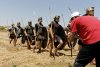
The Roman Empire conquered and changed all the peoples and cultures of Europe. Euskal Herria was no exception, although there was one distinguishing feature: the pre-Roman language that was spoken in the region was preserved. Euskera received an important Latin influence, at the same time as the culture, techniques, ways of life, etc. On the other hand, the Basque language can be traced back to testimonies written in the Imperial age, especially in Latin inscriptions that appear in the area of Aquitania.
21:10. Santa Pola, Archaeology and Museum. Fishing and the sea. Production: Diputación de Alicante. Departamento de Imagen. Direction: Pérez Ramírez, José. España, 2012, 25 minutos. Language: Castellano.
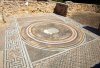
The region of Santa Pola, in Alicante province, is particularly rich in archaeological sites and findings. This documentary travels through its history, showing the main cultures that were present in the area, to end with a presentation of the city’s Museum. The documentary’s main thread is fishing, essential to the region’s economy since Roman times and to the present day.
Wednesday, 27 November 2013
19:00. The Fuentidueña apse: a journey from Castile to New York. Production: The Metropolitan Museum of Art (New York). Direction: Noey, Christopher. Estados Unidos, 2013, 28 minutos. Language: Inglés.
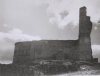
19:30. Intimate and monumental. Production: Crescendo Films. Direction: Clément-Colas, Sarah. Francia, 2011, 52 minutos. Language: Francés.
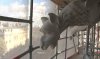
The Sainte Chapelle in Paris is one of the most beautiful Gothic churches in Europe, in addition to the third most visited monument in France’s capital, especially outstanding for the richness of its stained glass windows. Their restoration has involved a complex programme orchestrated by the Ministry of Culture and National Monuments Centre of France. Following its completion, this restoration has breathed new life into the Sainte Chapelle, thanks to the skilled work of scientist, historians, craftspeople, and professionals of the world of art.
20:20. Dispute at the dam. Production: Le Miroir. Direction: Bouvret, Jean-Luc. Francia, 2012, 52 minutos. Language: Francés.
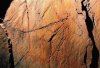
In the early nineteen nineties, a fantastic scientific discovery was made: in Portugal, along the river Côa, was the most important collection of prehistoric art to be found outdoors in the open air. But the Côa valley and its art, unique in the world, came under threat from the construction of a giant dam to produce electricity. An ideological, political and economic battle was sparked between the company responsible for the project: EDP - Energias de Portugal -, and those who defended protecting the cultural heritage, and which confronted politicians, scientist, students, farmers and the local inhabitants.
Thursday, 28 November 2013
19:00. Tengri. Production: Mel Hopenheim School of Cinema. Direction: Telengut, Alisi. Canadá, 2012, 6 minutos. Language: Sin locución.

19:05. Schulten’s Tartessos . Production: MLK Producciones. Direction: Lobo, Antonio. España, 2012, 67 minutos. Language: Castellano.
In the first decades of the 20th century, the search for Tartessos became an obsession for a young German historian who was set on discovering a new civilisation at the origin of Europe. Spain had become the El Dorado for Archaeology practitioners and Adolf Schulten was hoping to find below the sands of the Coto de Doñana his own particular Troy, a city that he embellished with the aura of Atlantis. Beyond the risk of such an adventure, this determination would mark Schulten’s career and Science’s perception of Tartessos for many decades.
20:10. The mystery of the Coptic mummies of Antinoopolis . Production: ARTE France. Direction: Bastide, Jackie. Francia, 2012, 52 minutos. Language: Francés.
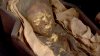
On the occasion of the opening of new rooms in the Louvre museum, devoted to the Eastern Mediterranean during the Roman Empire, a documentalist became enraptured by a mysterious treasure. Towards the end of the 19th century, the Parisian museum carried out research on a set of Coptic mummies and a collection of fabrics, which this documentary revives, contributing new and interesting data about the mummification processes of Egypt’s early Christians.
21:00. The passion of remembrance: the world of Arslantepe. Production: Rai Educational. Direction: Astengo, Isabella. Italia, 2012, 57 minutos. Language: Italiano.
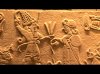
The history of the archaeological site of Arslantepe, hill of the lions, situated in Malatya (Anatolia, Turkey) began in the 5th millennium B.C. An Italian expedition, directed by professor Marcella Frangipane, has been digging there for more than 30 years, bringing to light important findings that help us to understand better not only Turkey’s past but also its present day.
Friday, 29 November 2013
19:00. To photograph the invisible . Production: Centre d´Etudes Alexandrines. Direction: Collet, Raymond. Egipto, 2012, 13 minutos. Language: Francés.
Man has always been intrigued by that which he cannot see. This search for the invisible is also interesting for archaeologists, who photograph objects, tombs, sarcophagi, or mummies on which the images have disappeared. But nowadays, there are image processing technologies that make it possible to see what vanished centuries ago. That is how the walls of the catacombs of Kôm el-Chougafa in Alexandria or the mummies in the Takla-Makan desert in China can be brought back to life.
19:15. The twilight of civilisations: Angkor, the swallowed city . Production: ARTE France. Direction: Gherdane, Saleha. Francia, 2012, 52 minutos. Language: Francés.
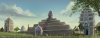
Angkor, capital of the Khmer Empire and the largest city in the world in the 13th century, was rediscovered by the French in the 19th century. They encountered an abandoned city whose fascinating ruins continue to move us today. Right now, scientists of every nationality continue trying to reveal the mystery behind the vanishing of this civilisation that dominated the region for centuries. Its water network was the key to the power of its rule, but was also its Achilles’ heel.
20:05. Siberia’s warrior kings . Production: ARTE France. Direction: Ségur, Benoît. Francia, 2012, 51 minutos. Language: Francés.
20:55. Isle of princes. Production: Media Promocja. Direction: Cozac, Zdzislaw. Polonia, 2012, 44 minutos. Language: Inglés.
The island of Lake Lednickie, in central Poland, was the site of the royal residence of Prince Mieszko I, of the Piast dynasty, in the middle of the 10th century AD. In 966 Mieszko converted to Christianity, and data abounds that would indicate that the Baptism ceremony took place precisely on this island. His son and successor Boleslaw the Brave, first King of Poland, made Lednickie his favourite residence, and is likely to have received Holy Roman Emperor Otto III there. The virtual reconstruction of this island helps us to travel to its medieval past.
21:40. The stitched boats of Kerala . Production: Centre d´Etudes Alexandrines. Direction: Collet, Raymond. Egipto, 2012, 26 minutos. Language: Francés.
Saturday, 30 November 2013
12:00. Prize Award Ceremony in Oiasso Roman Museum
Cine Arqueologico del Bidasoa
Museo Romano Oiasso
Eskoleta, 1. 20302 Irun
Tfno.: (+34) 943-63 93 53
E-mail: ficab.oiasso@irun.org
 Facebook