


 Bidasoko Nazioarteko Zinemaldi Arkeologikoa
Festival Internacional de Cine Arqueológico del Bidasoa
Bidasoko Nazioarteko Zinemaldi Arkeologikoa
Festival Internacional de Cine Arqueológico del Bidasoa
Gedeon Programmes
Details
- Website: www.gedeonprogrammes.com
- Contact: Laurence Corre (lcorre@gedeonprogrammes.com)
- Country: Francia
Films

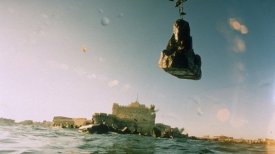
How did the pirates live, who were they beyond the legend? To answer this, our film follows two exceptional archaeological research missions to Mauritius and Madagascar. Until now, only a few pirate shipwrecks have been discovered. Today, in the western Indian Ocean, a team of archaeologists is conducting underwater studies in search of the remains of the Speaker, a famous pirate ship that sank in 1702... On land, complementary research is being carried out on Sainte-Marie Island, where pirates used to hide and live. Their research provides us with clues and tangible evidence of the mysterious lives of these men.Presentation by Mertxe Urteaga, archaeologist and member of the jury, and Ander Arrese, archaeologist at Suhar.
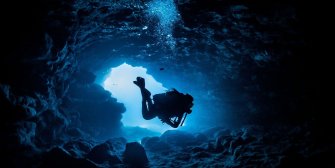
The only decorated submarine cave in the world,
Cosquer Cave, is located in the Calanques National Park, 37 metres below sea
level. Unknown due to its access difficulties, this incredible cave with 30,000
year-old paintings and engravings is threatened by rising waters. Following the
archaeologists who analyse its masterpieces and the artists who reproduce them,
the film tells its extraordinary story and investigates the people who lived on
this Mediterranean coast, which is now submerged.
Vatican City is rich with 2000 years of history within its walls. Over the years, the marshy area on the banks of the timber has held manyincarnations: A Pagan cemetery, Agrippina the Elder’s gardens, the Circusof Nero, Saint Peter’s Tomb, the Constantinian Basilica, a papal palace,as well as a Michelangelo, Raphael and Bernini masterpieces all beforeit became the smallest country in the world in 1929. How did this tinyhill on the outskirts of Rome become the architectural masterpiece ofSaint Peter’s Basilica, the papal palace and its garden? The film followsthe work of scientists, archeologists, historians and restoration teams tounveil little-known events from the architectural history of the holy site.Fascinating CGI reconstructions and animation trace the most spectacularmoments in the Vatican’s history.
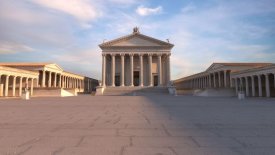
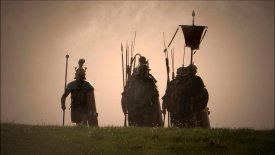
Narbonne. At the biggest site of archaeological digs in France, a researchteam is bringing to light the forgotten potential of the city in the Romanera. From the 1st century B.C., the then-called Narbo Martius, first Romancolony in Gaul, became the capital of an immense province, Gallia Narbonensis.The port city ended up being the centre of exchanges betweenthe colonies of the Empire and becoming the equal of its source: Rome!Starting out from an exceptional find, this film reconstructs, thanks toinfographics and the help of passionate historians and archaeologists,the extraordinary story of this ancient metropolis that shone for morethan three centuries over the Mediterranean world.
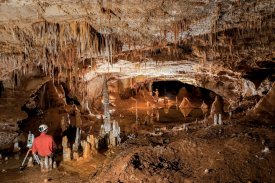
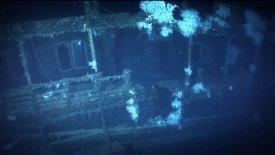
In the third
chapter of "Investigations in deep waters", French archaeologists
move their research to World War II. The Italian ship "Francesco
Crispi" was sunk in 1943 by the British submarine "Saracen" in
Mediterranean waters. Underwater surveys carried out in the vicinity of the
island of Corsica allow researchers to identify the Crispi and recover the
memory of the more than 900 Italians who lost their lives when it sank.
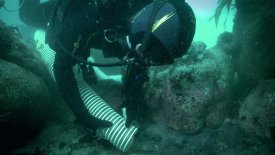
This is the second
instalment of this series that explores the seabed to locate sunken ships. On
this occasion, the surveys carried out by the DRASSM lead archaeologists to
Batz Island, in the French region of Brittany, where they locate a Roman wreck
with a shipment of more than 800 tin ingots. Through an exhaustive study of the
type and layout of the ingots, they will obtain valuable information about the
tin trade in the 3rd and 4th centuries BC.
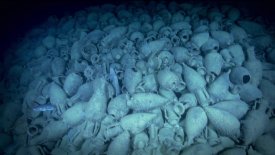
The series
"Investigations in deep waters" includes the most advanced underwater
archaeological explorations carried out by the French Underwater and Submarine Archaeological
Research Department, better known as the DRASSM. The depth at which some wrecks
are located impedes diving, so the Department uses robots to prospect, locate
and identify wrecks from very different eras. This is the case with this wreck
from the Roman era with an impressive load of amphorae that provides with interesting
information about shipping routes and trade in antiquity.
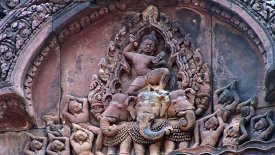
The prodigious stone vestiges of the Khmer empire and its capital
Angkor are known to all. But what do we know of the neighbouring populations
who inhabited the region between the ninth and fifteenth centuries? What were
the daily life, customs and religious beliefs of these people? The extension of
Siem Reap International Airport has allowed archaeologists to carry out a
preventive excavation that will answer many of these questions.
Official
Section. Place: Amaia K.Z. (Irun)
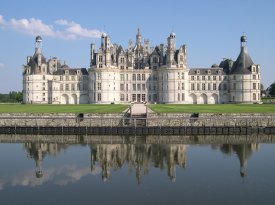
Chambord Castle is one of the most reputable of heritage sites in
the Loire Valley, France. Some of the keys points to its construction have
remained unresolved for almost 500 years. Little is known, to date, of its origins
and the meaning of its unusual architecture. Maybe Leondardo da Vinci, who
settled in the region on the request of King Francis I, had something to do
with its individual design? Research, including updated technology and
archaeological excavations, will present new answers.
CBA Section. Place:
Carlos Blanco Aguinaga Cultural Centre
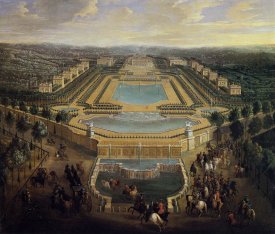
The domain of Marly, located near Versailles (France) has been
subject to further archaeological research. In underground areas of what was
once the castle, evidence has appeared of its decoration and daily life inside,
when it was inhabited in the times of Louis XIV. The monarch took refuge at
this place many times during the final years of his life, to get away from the
pomp of the court. 300 years after his death, these excavations are a unique
opportunity to discover the history of this royal residence.Official Section. Place: Amaia K.Z. (Irun)
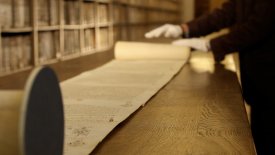
Paris, October 2010. Inside a 19th century covered market in the heart of Paris, an extraordinary archaeological excavation was carried out in the place where the Knights Templar built a place to house their treasures in the 13th century on their return from Jerusalem. Added to the information, of great historical importance, obtained from the excavation, are new archives located by Vatican historians, which will reveal previously unknown information about the Knights Templar and their participation in the Crusades.
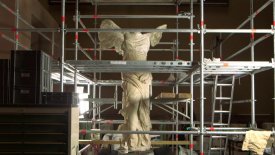
The restoration work that has recently taken place on
the Victory of Samothrace is the starting point for showing a varied wealth of
information about the sculpture. It tells in pictures the story of its
discovery, explains the context of the sanctuary in which it was found, its
transfer to France, the results of the research that tells us how it was
sculpted and other interesting details. It also looks at the process through
which it has become a cult image and one of the emblematic items in the Louvre
collections, arousing great interest among the visiting public.

The foundation of the walled town of Aigues Mortes at
the mouth of the River Rhone has given rise to the re-creation of the context
of the crusades promoted by French King Saint Louis. Using the current town as
a starting point, the walls of which are in perfect condition, and the plan of
the town as it was in the 13th century, as well as its situation in the estuary
marshes, we see the rise and fall of a sea port created to serve foreign trade
and act as a departure point for ships leaving for Jerusalem.
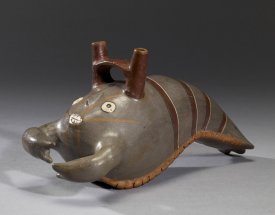
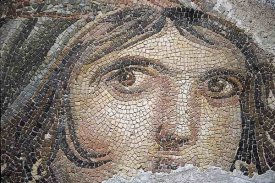
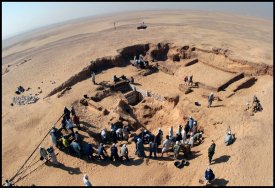
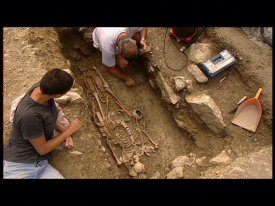

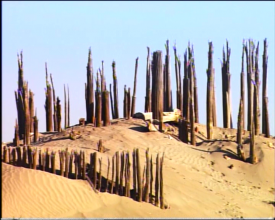
In Taklamakan, a desert in Central Asia, in China, there is a legendary
place called Loulan, through which the Silk Road used to run. The city,
which was discovered by the Swedish explorer, Sven Hedin in the early
20th century, houses a cemetery containing 300 graves. None of them has
been subject to scientific study. In spite of the extreme weather
conditions, a Chinese-Japanese expedition began to excavate the site and
to discover mummies in wooden sarcophagi in exceptional condition.
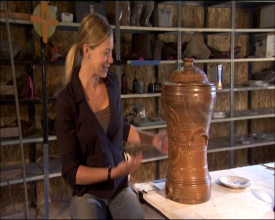
The American Wild West is one of the greatest myths of universal
history, with an imaginary town populated by cowboys, gold prospectors
and gunfighters. The archaeologist Kelly J. Dixon, aided by Ronald M.
James, a curator at the Nevada Museum, investigates the origins of the
city of Virginia, in the state of Nevada, USA. The most advanced
archaeological techniques, such as DNA identification, together with
excavations on the Boston Saloon site and historical research in
archives, give us a new vision far from the clichés on how the West was
won.
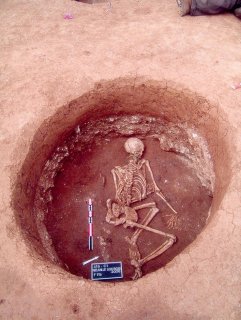
The Preventive Archaeology programmes associated to the construction of
the French A19 highway (Burgundy) has allowed 250 archaeologists to work
for 18 months on the different sites discovered over the 101 km covered
by the new road. From prehistoric times through to the 15th century,
the A19 has become a machine which takes us back in time.
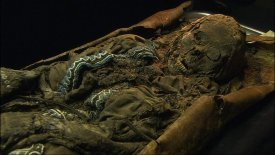
The anthropologist Eric Crubezy has made a sensational discovery in the
permafrost of Yakutia, in eastern Siberia: he has dug up the body of a
woman in a wooden casket, surrounded by offerings. Given the
characteristics of the burial site and the grave goods, Crubezy believes
that it is a shaman of the town of the Yakuts.
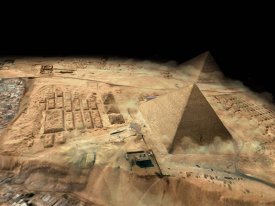
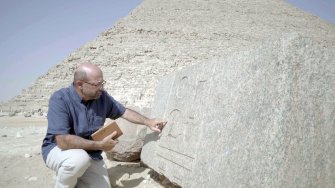
From the Seven Wonders of the Ancient World, the pyramids of Giza are
the only one to have survived today. The highest of them is the pyramid
of Khufu, and is at the same time the most enigmatic of all the
pharaonic constructions. The French architect Jean-Pierre Houdin
presents innovative research based on new technologies, which
re-examines the Khufu pyramid providing a revolutionary hypothesis on
its construction system.