


 Bidasoko Nazioarteko Zinemaldi Arkeologikoa
Festival Internacional de Cine Arqueológico del Bidasoa
Bidasoko Nazioarteko Zinemaldi Arkeologikoa
Festival Internacional de Cine Arqueológico del Bidasoa
Bidasoko Nazioarteko Zinemaldi Arkeologikoa
Festival Internacional de Cine Arqueológico del Bidasoa
Bidasoko Nazioarteko Zinemaldi Arkeologikoa
Festival Internacional de Cine Arqueológico del Bidasoa
Country of production
- Alemania
- Andorra
- Arabia Saudí, Jordania, Francia, Alemania
- Argentina
- Australia
- Austria
- Bélgica
- Brasil
- Bulgaria
- Canadá
- Chile
- China, Francia
- Chipre
- Ciboure
- Corea del Sur
- Dinamarca
- Donostia-San Sebastián
- Egipto
- El Salvador
- Errenteria
- Escocia
- Eslovaquia
- España
- Estados Unidos
- Estonia
- Francia
- Gran Bretaña
- Grecia
- India
- Irán
- Irun
- Israel
- Italia
- Jordania
- Letonia
- Lezo
- Líbano
- Malasia
- México
- Noruega
- Países Bajos
- Perú
- Polonia
- Portugal
- Reino Unido
- Reino Unido, EE.UU
- Rusia, Mongolia
- Serbia
- Suecia
- Suiza
- Turquía
- Venezuela
Territory
- Afganistán
- África
- Alemania
- Apulia
- Arabia Saudí, Jordania
- Argentina
- Australia
- Austria
- Bélgica
- Brasil
- Bulgaria
- Burkina Faso
- Camboya
- Canadá
- Chile
- China
- Chipre
- Corea
- Egipto
- El Salvador
- Emiratos Árabes Unidos
- Escocia
- España
- Estados Unidos
- Estonia
- Etiopía
- Europa
- Euskal Herria
- Francia
- Gipuzkoa
- Gran Bretaña
- Grecia
- Guam
- Guatemala
- India
- Indonesia
- Irak
- Irán
- Isla de Pascua
- Islandia
- Israel
- Italia
- Italiano
- Jordania
- Kurdistán
- Líbano
- Libia
- Malasia
- Mediterráneo
- Menorca
- Mesopotamia
- México
- Mongolia
- Namibia
- Noruega
- Océano Índico
- País Vasco
- Pakistán
- Panamá
- Perú
- Pirineos
- Polonia
- Portugal
- Reino Unido
- Rusia
- Rusia, Mongolia
- Sáhara
- Serbia
- Siberia
- Siria
- Sudáfrica
- Suecia
- Suiza
- Tazania
- Turquía
- Vaticano
- Venezuela
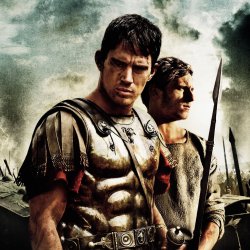
Roman legionary Marcus Aquila travels from Rome to trace the Ninth Legion, a contingent that disappeared 20 years ago in the Scottish Uplands. Marcus’s father is among the missing. He is accompanied on his quest by his servant, Esca, an English slave. Their adventure plays out in this wild, savage landscape in a tale that combines violent action with growing bonds of friendship.
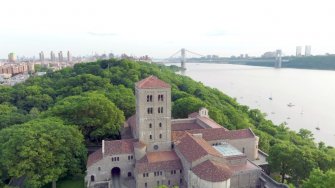
When we talk about the French in New York, everyone thinks of the Statue of Liberty. But in the north of Manhattan, far from the tourist trail, the Cloisters Museum houses other fragments of France, and important ones at that. Despite being part of the Metropolitan Museum of Art, this medieval department feels like a Pyrenean abbey arranged round four cloisters imported from Occitania at the beginning of the 20th century. The film tells the story of this extraordinary adventure.
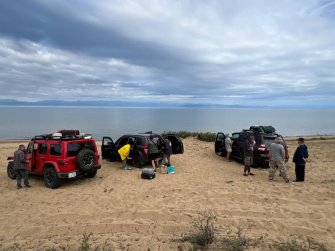
This film is made in the genre of docufiction for a young audience. The film tells the story of the great russian traveler of the early 20th century Piotr Kozlov, an explorer of Central Asia who discovered the anciente city of Khara-Khoto lost in the sands. Unfortunately, this name is little known, although the Hermitage and other museums are proud of the collections from his expeditions. The plot of the film is the "path" of a young scientist who inmerses himself in the "unknown personality" of the passionate Kozlov, in the "era of great discoveries" that took place 100 years ago. The viewer follows the hero of the film. A parallel is the Mongolian Scientific Expedition of 2023-2024 "Along the routes of Piotr Kuzmich Kozlov". The expedition includes famous scientists, historians, archaeologists and geologists.
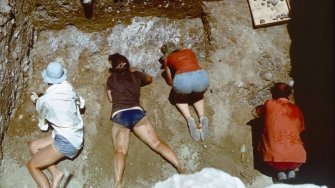
Fifty years after the coup d’etat and the Turkish invasion of Cyprus, foreign and Cypriot archaeologists along with retired staff members of the Department of Antiquities, evoke their personal memories, as they reflect on the collective trauma of war and its consequences on Cypriot archaeology. Interweaving archival material from excavations with captivating personal testimonies, Skammata presents momentous events that marked Cypriot archaeology, before and after the tragic summer of 1974. “Skammata” in Greek literally means the process of digging, and it also means “trenches” – signifying the archaeological trenches, but also the trenches of war.
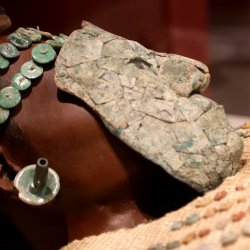
In 1994, during archaeological excavations in Temple XIII of the ancient Mexican city of Palenque, a team of scientists and other specialists made an exceptional discovery: the burial chamber of a woman, coated with bright red cinnabar powder and containing all the attributes of a royal tomb. She was named the Red Queen by the lead archaeologist of the excavations, Arnoldo González Cruz. Further investigations suggest that she was Tz’ak-b’u Ajaw, the consort of the young king K’inich Janahb Pakal, under whose rule Palenque established itself as the indisputable powerhouse of the western Maya Lowlands.
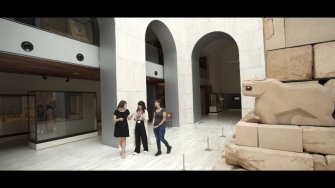
Several Spanish women archaeologists tell the recent story of the discipline from a gender perspective, tracing the shared journey of past, present and future generations through their personal experiences.In collaboration with ONCE: AUDESC system available
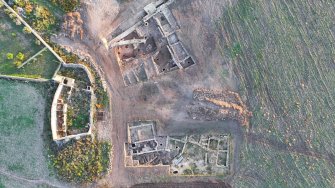
In Siponto, among dust, tools and focused gazes, a day of excavation becomes the occasion to tell not only the story of an archaeological site, but of a profession. “ Field Diary. Archaeologists in Siponto” is an observational documentary that closely follows the daily work of archaeologists, highlighting their effort, precision, care, and the ordinary humanity behind the act of bringing history back to light. Through the site’s story, the film reveals the t rue nature of archaeological work, while e mphasizing t he v alue o f p ublic a rchaeology as a civic practice and a means of dialogue with the territory. With no voiceover or mediation, the film unfolds in the real time of a working day, listening to gestures, observing the bond between people and land, between science and community. A silent narrative, yet full of meaning.Presentation and discussion led by Doctor Xabier Peñalver
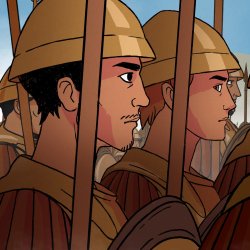
Army of Lovers tells the untold epic saga of the Sacred Band, an elite force of 150 pairs of male lovers who became the most formidable warriors of the ancient world. This Greek army wasformed by the city of Thebes in 379 BCE to end Spartan domination. Fighting for four decades undefeated, it was annihilated by the forces of Philip II of Macedon and his son Alexanderin the Battle of Chaeronea. Buried on the battlefield where they fell, the 300 were forgotten by history, until a Greek archaeologist discovered the mass grave in 1880. The discovery was never made public and the grave was covered up, leading some historians to claim that the Sacred Band never existed.It was only in 2019 that a missing skeleton was found in the basement of the Athens Archaeological Museum, as well as the excavation logs with detailed drawings of the mass grave: itdepicted an army of 300 men lying in pairs, their arms linked together. A team of international archaeologists and historians is re-examining the newly uncovered evidence, gaining unprecedented insight into the story of the Sacred Band.Their findings challenge us to rethink our understanding of Ancient Greece and our perceptions of heroism and masculinity across time.
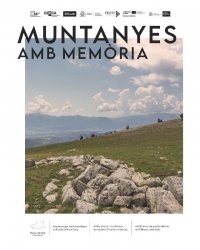
This documentary describes the archaeological dig carried out by the Research Group on Landscape Archaeology (GIAP) of the Catalan Institute of Classical Archaeology in the Eastern Pyrenees. We are invited to witness the day-to-day activities at the Coll de Morelles site (Meranges), the highest Roman site excavated in Spain and the Mediterranean, and learn abouta rare archaeological discipline: high-mountain archaeology
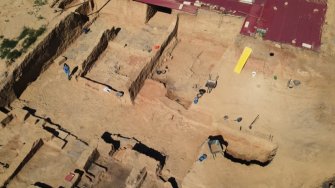
Discover the traces of the Tartessians and the marks they left in the southwest of the Iberian peninsula. Dating back to the 9th century BC, this mysterious pre-Roman civilisation adopted a fusion of Phoenician culture and that of the indigenous populations who lived on the banks of the Guadalquivir. They may even have extended to Portugal, although in recent years research has focused on another area: the Middle Guadiana Valley. Several sites in Extremadura are yielding valuable information about this lost culture and revealing the extent of its architecture, goldsmithing, commercial exchanges, religious beliefs and incipient writing system.
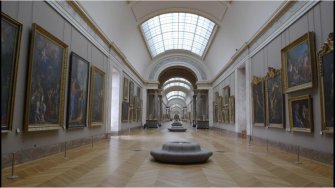
23 crowns from the Visigoth period found by pure chance, on the outskirts of Toledo, in Guadamur in the 1850s. The treasure ends up being scattered throughout Spain and France and almost seventy years after its discovery, some of the crowns are returned by Petain to the Franco Government. In this way, Spain fulfilled a centuries-old revenge with its northern neighbor, and “snatched” from it, since the agreement was very disadvantageous for France, pieces stolen by Napoleonic soldiers and others purchased legally
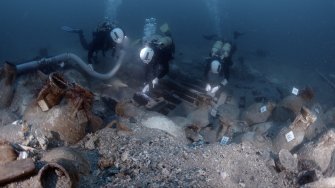
In the 1950s, scrap metal in Spain was in short supply, so metal from the shipwrecks near the coast acquired an unexpected monetary value. Objects we now think of as archaeologicalartefacts were at the time the resources upon which many families and businesses depended. The Ebro Sea became a hub for this underwater business. Along came dry suit divers and scuba divers or frogmen, attracted by the job opportunities. Their stories have become inseparable from the fascinating accounts of the ships they dismantled. Who were the people who risked their lives to recover rusty remains from the depths? And what did they find at the bottom of the sea?
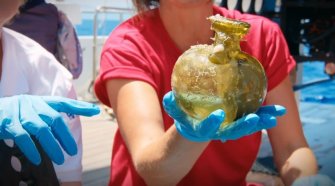
In 2013, Italian engineer Guido Gay discovered an ancient shipwreck between Corsica and Italy at a depth of 360 meters. While the cargo was initially thought to be ballast stone, it soon became clear that the ship was delivering tonnes of glass in varying degrees of workmanship. This remarkable discovery, the second of its kind, prompts the formation of a Franco-Italian archaeological team to investigate the wreck’s cargo, now known as the Capo Corso 2, onboard the Alfred Merlin. This film explores the significance of glass in Ancient Rome through the team’s deep-sea archaeological research, and how the development and dissemination of glassmaking methods changed human civilisation forever.
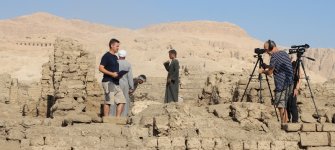
This report on the latest 34th Ramesseum archaeological mission in Luxor, Egypt, invites viewers to fully immerse themselves in a dig. From the excavation of a burial shaft to the extraction of the courtyard of a Middle Empire tomb, this documentary reveals in detail the daily activities of an archaeological campaign.
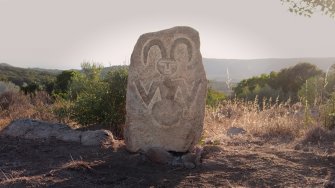
Three thousand years before Stonehenge and the sculpted menhirs of Filitosa were created, an enigmatic figure was carved on a stela in Balchiria, southern Corsica, where it recentlyresurfaced. Is it a god or a demon? A warrior or a sorcerer? What was its function? Embark on this archaeological expedition that will take us from the excavations of Balchiria, by way of Greece, Spain and Sardinia, to the far corners of the Mediterranean. This voyage into the past will track the mysterious sculpture on the different stages of its long journey

The children from the Alihuén Rural School in Challupen, along with their teachers and guardians, travel to Santiago, the capital of Chile, to see the Metawes—millennia-old potterypieces—that were looted from their ancestors’ cemeteries. For many of them, this is their first trip to the city, making it a significant event for both the children and their families.This narrative of a journey reveals the contradictions between historical preservation and the extraction of resources from communities and their ways of life. It is a manifestation ofcentralism and, at the same time, a gesture of reconnection for the new generations with their recent past.
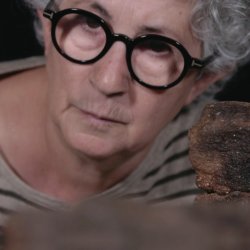
The past and the present intertwine through a fragile thread: memory, also preserved in inert materials where the traces of history endure. Anatomy of a Kiln delves into the Iron Age toexplore, through experimental archaeology, the ceramic kiln of Castromao (Galicia). The analysis of materials allows us to better understand past processes but also reminds us that, like memory, the anatomy of objects always holds unknowns.
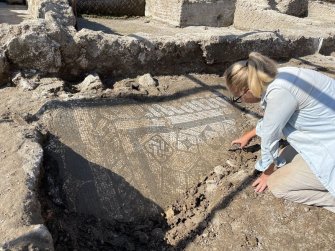
In the heart of central Italy, at the foot of the cliff of Orvieto, lies Campo della Fiera, an extraordinary place where sacredness and history have been intertwined for over two thousand years.Identified as the site of the legendary Fanum Voltumnae, a federal sanctuary of the Etruscans. The site then saw the passage of different eras, becoming a spiritual and administrative centreof the Romans and later a Franciscan settlement. Archaeological investigations conducted over the last twenty years have brought to light artefacts of inestimable value: ancient temples, mosaics, precious ceramics and a deep well that has never been explored, guardian of forgotten treasures. Through historical reconstructions, exclusive interviews and spectacularfilming, ‘Campo della Fiera and the Well of Time’ takes the audience on a fascinating journey to discover the life, decline and rebirth of this unique site. One of the artefacts found in thewell also opens a crack in the veil of mystery surrounding the Templars and a possible historical intrigue.
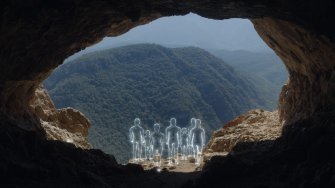
Long before the arrival of Homo sapiens or even Neanderthals, other humans inhabited French territory during intense periods of glaciation. One place in particular has witnessed their passage: the Tautavel cave in France, at the foot of the Pyrenees mountain range. How did these ancient humans survive in such a harsh environment? Based on the latest scientific discoveries, the film changes the way we look at these distant ancestors, whose cognitive abilities never cease to amaze us.
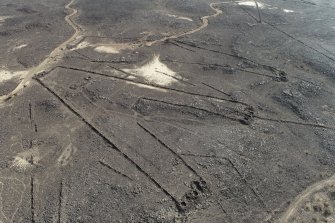
In northern Saudi Arabia and southern Jordan, there are thousands of mysterious geometric structures, the shape of which, when seen from the sky, are reminiscent of huge kites. Themost ancient of these gigantic stone alignments were created in around 7000 BC. This makes them some of the oldest structures in human history, more than 4000 years older than thepyramids of Egypt and the spectacular stone alignments of Stonehenge. Who build them ? And why ? Using the most up to date technology available and committed to shed new light onthis little known period of the neolithic, an international team of archaeologists is attempting to solve the enigma.
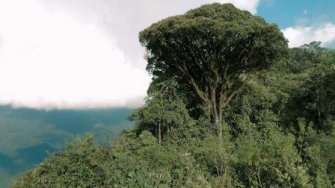
Deep in Peru’s Río Abiseo National Park, a UNESCO Mixed World Heritage Site, an interdisciplinary team of scientists and conservationists sets out on a unique journey to investigate, document and protect the Gran Pajatén archaeological complex, the cultural legacy of the ancient Chachapoya civilisation. This film documents their efforts to preserve the site and the challenges of working in one of the most remote and environmentally endangered places on the planet.

In 2013, some committed archaeologists, with hardly any resources, began authorized excavations to recover the Iberian fort of Aigües Baixes, on a privately owned plot of land, in the municipality of El Campello (Alicante). A year later, after the archaeological work of the first campaign and the beginning of the procedures to declare it B.I.C. (Asset of Cultural Interest), a large part of its structure recovered by archaeologists is razed by an “unexpected” and “invisible” excavating machine. This is the story of a construction built 2,500 years ago, where human action illegally attempted to return it to oblivion.
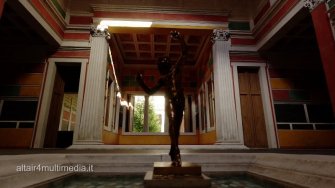
Pompeii is one of the most significant archaeological sites in the world. Founded in the 7th century BC, Pompeii was a thriving city teeming with commercial and cultural activities. It flourished until its tragic demise in 79 AD, when a catastrophic volcanic eruption buried it under a thick layer of ash and pumice, preserving its wonders for centuries. Among its many remarkable structures, the House of the Faun stands out as an extraordinary example of Roman architecture. This grand residence not only reflects the status of the family who lived there but also serves as a vital symbol of Pompeii’s rich cultural life.