


 Bidasoko Nazioarteko Zinemaldi Arkeologikoa
Festival Internacional de Cine Arqueológico del Bidasoa
Bidasoko Nazioarteko Zinemaldi Arkeologikoa
Festival Internacional de Cine Arqueológico del Bidasoa
ARTE France
Details
- Contact: Farida Dendoune (f-dendoune@artefrance.fr)
- Country: Francia
Films
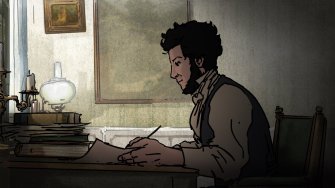
On the morning of 14 September 1822, in a room under
the roof in Paris, Jean-François Champollion finally reached his goal. The
decoding of a last cartouche had just provided him with the missing elements. A
thousand-year-old civilisation had found the word... It was the culmination of
a quest lasting almost 30 years. Crazy with joy, he rushes into the arms of the
man who was his mentor over the decades: his elder brother, Jacques-Joseph.
History has only remembered the younger brother, yet the deciphering of the
hieroglyphs was that of a duo: two brothers who believed in their destiny, and
one by one pushed back the obstacles to finally succeed, where generations of
researchers had given up.
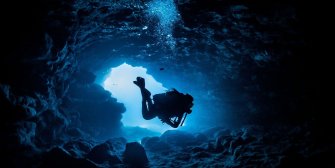
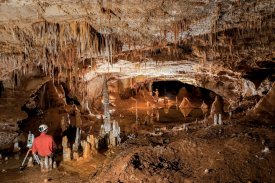
The only decorated submarine cave in the world,
Cosquer Cave, is located in the Calanques National Park, 37 metres below sea
level. Unknown due to its access difficulties, this incredible cave with 30,000
year-old paintings and engravings is threatened by rising waters. Following the
archaeologists who analyse its masterpieces and the artists who reproduce them,
the film tells its extraordinary story and investigates the people who lived on
this Mediterranean coast, which is now submerged.
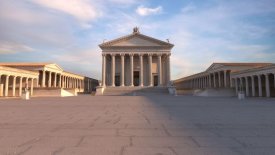
Narbonne. At the biggest site of archaeological digs in France, a researchteam is bringing to light the forgotten potential of the city in the Romanera. From the 1st century B.C., the then-called Narbo Martius, first Romancolony in Gaul, became the capital of an immense province, Gallia Narbonensis.The port city ended up being the centre of exchanges betweenthe colonies of the Empire and becoming the equal of its source: Rome!Starting out from an exceptional find, this film reconstructs, thanks toinfographics and the help of passionate historians and archaeologists,the extraordinary story of this ancient metropolis that shone for morethan three centuries over the Mediterranean world.
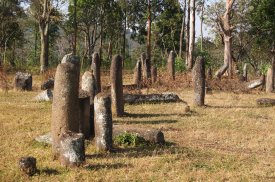
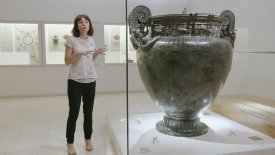
Late 2014: in Lavau (Champagne, France) a team of archaeologists located
a funeral chamber with a skeleton adorned with gold jewellery and surrounded by
luxury items, with magnificent Greek and Etruscan pieces. The tomb, dated as being
from the 5th century BC and known as "The Prince of
Lavau", is one of the most important discoveries in recent European Archaeology,
which will serve in this documentary as a starting point for looking at the Celtic
world and its relationship with the neighbouring towns of the Mediterranean.
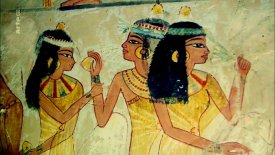
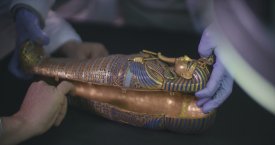
In January 2011, while the Cairo region was undergoing
the revolts of the Egyptian revolution, the University of Basel made two
important discoveries in the south of the country, in the Valley of the Kings:
a crypt containing dozens of bodies and a tomb that had been completely unknown
until then. Archaeologists investigated the identity of the corpses found and
finally reach an amazing conclusion. What secret will these tombs hide?
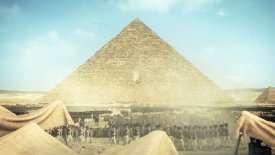
May 1798: Napoleon embarks on his eastern
dream and disembarks in Egypt –the cradle of civilization– with a contingent of
soldiers, sailors and intellectuals. Once the country was pacified, the
so-called "savants" (scientists who accompanied the troops) were
finally able to discover the archaeological wonders hidden in the country.
However, while the expedition headed south, Syria's military campaign
stagnated. After three years of work, the political and military events forced
these pioneers of Egyptology to return to France.
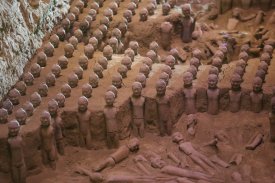
The Han Dynasty ruled in China from the
3rd century B.C. to the 3rd century A.D. with a series of emperors who lived in
an extremely rich, sophisticated environment. Although many of their tombs have
been looted, recent finds in burial grounds point to the flourishing of this
Empire, enriched by the Silk Road trade routes. The sovereigns were buried
inside magnificent mausoleums among jade, gold, silk, precious jewels and,
occasionally, miniature terra cotta armies.
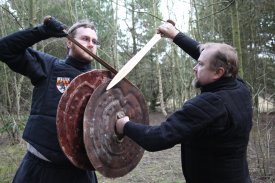
In England, a team of scientists works on
the remains of a Bronze Age village, known as Must Farm. The dwellings and the
materials have been so well conserved that it has been dubbed "The British
Pompeii". Inhabitants of the place, preserved thanks to it being a marshy
area, extensively practised a flourishing agriculture and traded with other
European peoples, demonstrating that exchanging goods was very much the norm in
this prehistoric period.
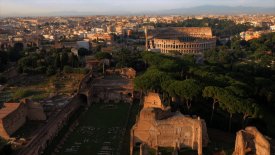
It seems difficult to believe that new information
about the Coliseum, one of the great architectural gems of Ancient Rome, can
still discovered at this stage. And yet this documentary shows exhaustive work
being carried out that gives us new knowledge about the monument that is
considered to be an example of the best artistic and constructive genius of the
Roman Empire. Archaeologists and historians join forces to re-investigate the
architecture and the use of this media tool for imperial power. Built in the
1st century A.D. by the Emperor Vespasian to legitimise the power of the new
dynasty, the Coliseum had unlimited resources to seduce the people of Rome.
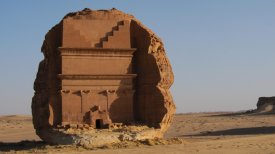
The city of Petra, which was the capital of a very
wealthy kingdom, that of the Nabataeans, continues to offer new discoveries.
Situated within the confines of three deserts, the Arabian Desert, the Syrian
Desert and the Negev Desert, it was absorbed by the Roman Empire at the
beginning of the Christian Era. During this period, a series of monuments
excavated from local stone was created, giving it a unique personality. It was
later abandoned and remained in the hands of the Bedouins, fading into
obscurity until its rediscovery in the 19th century. However, as this
documentary will demonstrate, Petra is part of a much wider cultural context,
thanks to which we are able to understand many of its specific features.
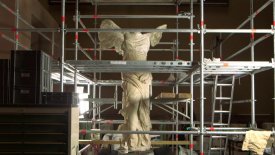
The restoration work that has recently taken place on
the Victory of Samothrace is the starting point for showing a varied wealth of
information about the sculpture. It tells in pictures the story of its
discovery, explains the context of the sanctuary in which it was found, its
transfer to France, the results of the research that tells us how it was
sculpted and other interesting details. It also looks at the process through
which it has become a cult image and one of the emblematic items in the Louvre
collections, arousing great interest among the visiting public.
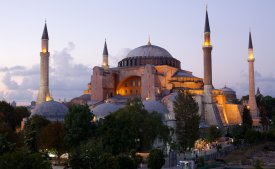
This documentary describes in great detail the
artistic and architectural personality of Hagia Sophia, a 6th century church
that is still standing, despite its location in an area subject to frequent
earth tremors and it having fallen into Muslim hands in the late 15th century.
Numerous computer graphics and 3D reconstructions make it possible to see the
main features of this monument.
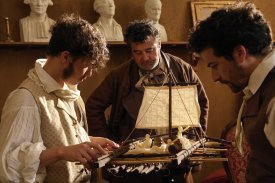
This film is based on the famous painting by
Géricault, on show at the Louvre, "The raft of the Medusa". The ship
sank off the coast of Africa in the 19th century; the passengers and
crew escaped in several small vessels and on a raft, which remained adrift in
harsh conditions. Its rescue became a phenomenon that profoundly affected
French society. The documentary recreates the event as far as reconstructing
the raft and setting it afloat to find out details of life on board.
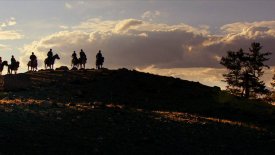
A
Franco-Mongolian archaeological expedition discovered the tomb of a 2300-year
old Scythian warrior on the frozen steppes of Mongolia. Combining the results of
excavations and ethnoarchaeology, archaeologists question the similarities
between the current populations of Kazakh nomads and the Eastern
Scythians, who inhabited these same lands some 2000 years ago.
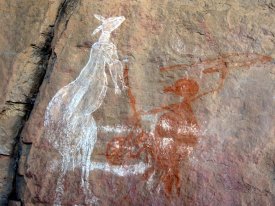
15,000
years ago, water from the thaw covered 15% of the Australian continent, cutting
off territories such as New Guinea
and Tasmania.
This separation of territories had a significant impact on the diet, language,
culture and science of the inhabitants of Tasmania. The documentary explores Australia’s
ancestral past through archaeological discoveries and the oral tradition of
aborigines, which is still present today.
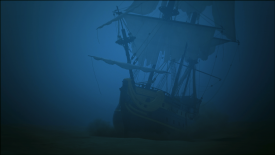
The “Lune”
was shipwrecked offshore around Toulon in
November 1664, on its return from an expedition to the coast of North Africa, with a thousand men on board. Under
pressure from Louis XIV, the Sun King, and his entourage, the tragedy was
covered up and the boat was forgotten about. It was discovered in 1993 at a
depth of 90 metres,
thus making the work of archaeologists extremely difficult. But now, 20 years
on, new technologies have meant the ship can finally be explored through a
combination of scientific knowledge and amazing technological devices.
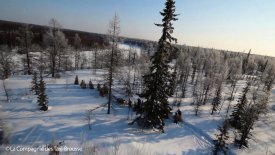
The discovery of an underground fortress in Siberia intrigues archaeologists. Thanks to the files
kept in Moscow,
the inhabitants of this place are finally identified, revealing that in the 17th century an armed alliance of nomads led a war for more than one century against
the Russians who had arrived to colonise their land. But although it seemed like
nothing could stop them, the clan was suddenly exterminated …

Angkor, capital of the Khmer
Empire and the largest city in the world in the 13th century, was
rediscovered by the French in the 19th century. They encountered an
abandoned city whose fascinating ruins continue to move us today. Right now,
scientists of every nationality continue trying to reveal the mystery behind
the vanishing of this civilisation that dominated the region for centuries. Its
water network was the key to the power of its rule, but was also its Achilles’
heel.
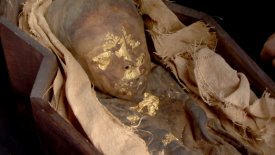
On the occasion of the opening of new rooms in the
Louvre museum, devoted to the Eastern Mediterranean during the Roman Empire, a documentalist became enraptured by a
mysterious treasure. Towards the end of the 19th century, the
Parisian museum carried out research on a set of Coptic mummies and a
collection of fabrics, which this documentary revives, contributing new and
interesting data about the mummification processes of Egypt’s early
Christians.
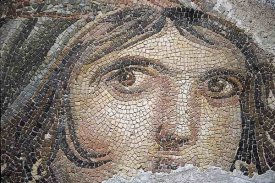
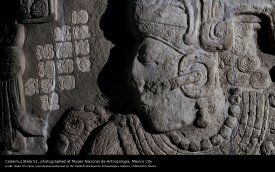
“Breaking the Maya Code” is the story of 200 years of investigation,
which has allowed the hieroglyphic writing of the Mayas to be
deciphered. It is an epic narration which takes us from the jungles of
Guatemala through to the snows of Russia, and from ancient Maya temples
through to the dusty libraries of Dresden and Madrid.
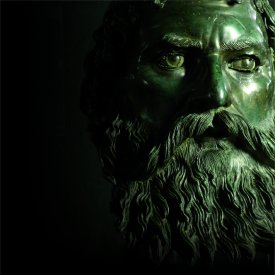
Following
the discovery in 2004 of the tomb of Thracian king Seuthes III, in
Bulgaria, archaeologists and historians began to decipher his legacy,
finding themselves face to face with the figure of a modern king open to
Hellenization, but at the same time opposed to the Macedonian yoke; a
priest-king, also linked to the conservation of Orphic rites so typical
of the Thracian society.
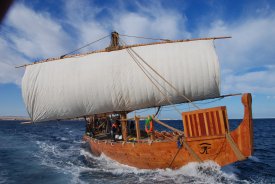
In the New Empire of Ancient Egypt, the only woman to reign, Pharaoh
Hatshepsut, promoted a series of expeditions of a commercial nature to
the far-off Land of Punt. In the temple of Deir el-Bahari a series of
reliefs has been conserved with images of the naval expeditions. Thanks
to these, a team of archaeologists has been able to build a replica of
an Egyptian ship from 1500 BC. However, the real challenge appears when
they try to sail the experimental ship…
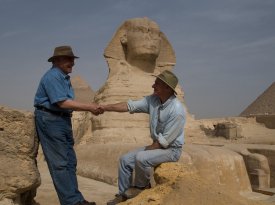
The Sphinx of Giza, which represents the Pharaoh Khafre, is one of the
most important monuments in ancient Egypt but there are still many
unanswered questions: Who built this colossal lion with the head of a
man? How? Why? Two renowned Egyptologists, Zahi Hawass and Mark Lehner,
attempt to solve the enigma.