


 Bidasoko Nazioarteko Zinemaldi Arkeologikoa
Festival Internacional de Cine Arqueológico del Bidasoa
Bidasoko Nazioarteko Zinemaldi Arkeologikoa
Festival Internacional de Cine Arqueológico del Bidasoa
Azéma, Marc
Details
- Email: marc.azema@passesimple.net
- Country: Francia
Films
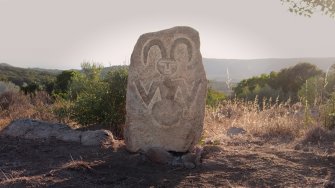
Three thousand years before Stonehenge and the sculpted menhirs of Filitosa were created, an enigmatic figure was carved on a stela in Balchiria, southern Corsica, where it recentlyresurfaced. Is it a god or a demon? A warrior or a sorcerer? What was its function? Embark on this archaeological expedition that will take us from the excavations of Balchiria, by way of Greece, Spain and Sardinia, to the far corners of the Mediterranean. This voyage into the past will track the mysterious sculpture on the different stages of its long journey
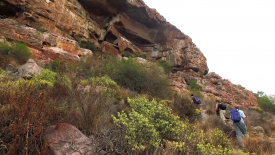
A team of archaeologists from Bordeaux
travels to South Africa with a specific goal: to date the oldest vestiges of
artistic activity in the history of mankind. Surrounded by magnificent African
landscapes, travelling from the Atlantic coast to the shores of the Pacific and
from the desert to the tropical forest, we will journey through one of the most
ancient territories occupied by Homo sapiens as we search to date the oldest
representations of symbolic thought.

This contemplative animated film allows us
to visit the Roman city of Nîmes through the illustrations of Jean-Claude
Golvin, a specialist in restoring ancient monuments. Viewers move through the
artist's watercolours, which show the most iconic monuments of the ancient city
of Nemausus through 2D and 3D animation techniques: the Tour Magne, the Maison
Carrée, the Amphitheatre or the Temple of Diana, to mention just a few.
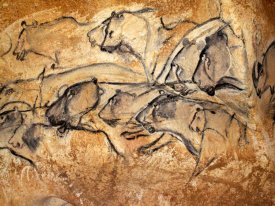
In this film, viewers take the place of a
young prehistoric woman and move through an imaginary cave where galleries and
masterpieces of European prehistoric art appear: Chauvet, Lascaux, Niaux, El
Castillo, Pech Merle, Cougnac, Foz Coa... Suddenly, the animals drawn on the
walls come to life by torchlight... A short film to get swept away by the
beauty of Palaeolithic art.
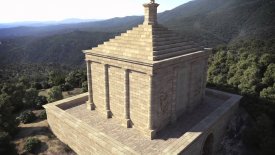
The Pompey Trophy was erected in the Eastern Pyrenees between
73-71 BC, to celebrate the triumph of the Roman general in the Sertorian Wars.
Despite the importance of the monument, the interpretation of the ruins is
complicated. To facilitate its interpretation, its appearance has been restored
using images, which, based on archaeological research, allow its appearance to
be recreated.
Official Section. Place:
Amaia K.Z. (Irun)
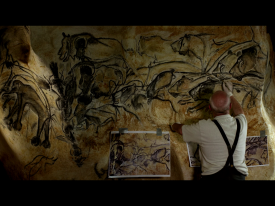
Is it crazy to say that cinema was invented in the Palaeolithic
period, 20,000 years ago? A new interpretation of Paleolithic art paintings
and engravings has shown that prehistoric artists were able to break down the
movement of animals depicted on cave walls, as a primitive form of animation
film. Not only that, they also had the ability to graphically express a story,
a way of telling stories through sounds and images.Official Section. Place: Amaia K.Z. (Irun)
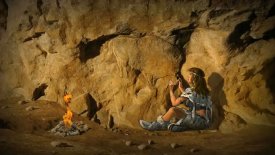
Who were the first Europeans? For almost 2 million years, Europe has
experienced incessant migrations and successive stages of survival and
adaptation to new lands. Providing an account of this continuous
evolution over such a long period is no mean feat, but the documentary
manages to construct a coherently-argued summary through technological,
artistic and cultural indicators representative of the early inhabitants
of our continent.