


 Bidasoko Nazioarteko Zinemaldi Arkeologikoa
Festival Internacional de Cine Arqueológico del Bidasoa
Bidasoko Nazioarteko Zinemaldi Arkeologikoa
Festival Internacional de Cine Arqueológico del Bidasoa
Tournez s´il vous plait
Details
- Contact: (info@tsvp-prod.com)
- Country: Francia
Films
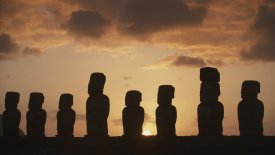
Lost in the
middle of the Pacific Ocean, just 25 km long and more than 3,500 km away from
the nearest inhabited areas, Easter Island is seen as a heritage treasure
thanks to its famous Moais. Who were the Rapa Nui who erected these monumental stone
sculptures? Where did they come from? And what were the reasons for their
disappearance? The debate among scientists has been ongoing for decades...
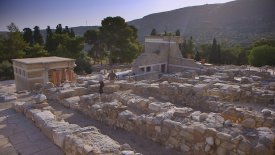
The third archaeological investigation presented by
Peter Eeckhout at the festival takes him to the Mediterranean island of Crete,
to visit the most important Minoan sites, particularly the Palace of Knossos. A
new interpretation of the site leads to the questioning of its use as a palace,
proposed by the archaeologist Arthur Evans when he excavated there in the early
20th century. Also the function of the so-called Throne Room and the
central courtyard are called into question. What interpretation will this new
theory offer about the Cretan palaces?
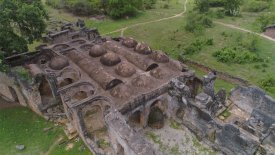
In this episode
of the “Archaeological Research” series, archaeologist Peter Eeckhout travels
to Tanzania to find out about the Swahili world through its most emblematic
site: Kilwa. This city on the east coast of Africa experienced its Golden age
in the 14th and 15th centuries because of its trade over the Indian Ocean that
reached India and China. Among its monumental remains are the palace of the
sultans who governed the city and the Great Mosque, which now take on a
different interpretation in the light of new research.
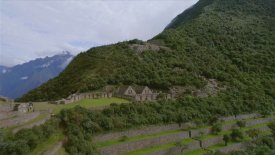
The series "Archaeological research" offers
a trip around the world to discover the most significant archaeological finds in
recent times. On this occasion, we will visit, with Belgian archaeologist Peter
Eeckhout, an Inca city, Choquequirao, hidden in the heart of the Peruvian
Andes. Like Machu Picchu, it was a religious and political centre with some
interesting monumental remains still preserved, including several open spaces
for ceremonial use.
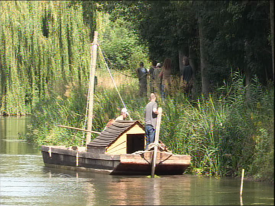
With the arrival of the Romans, Gaul witnessed a great development
in means of transport that would radically alter society: products circulate,
but so do information, beliefs and technology. Travellers, bringers of new
developments, actively participate in the unity and wealth of Gallo-Roman
civilisation.
Educational Section. Place: Conference Hall Amaia K.Z. (Irun)
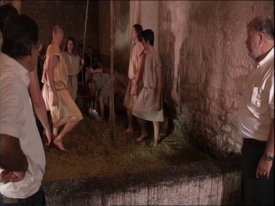
Since the Greek era and especially during Roman times, viticulture
spread across Gaul, which was carpeted with vineyards. As wine lovers, the
Romans imported their Mediterranean vines but also their farming and winemaking
techniques. The Gallic productions were exported across the empire and the
volume of production of that time has only been surpassed by modern times. What
were the Gallo-Roman winegrowers like?
Educational Section. Place: Conference Hall Amaia K.Z. (Irun)
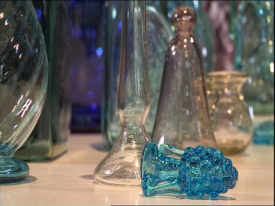
With the Roman conquest of Gaul new ways of life came about. Local
craftsmen who were highly technical qualified adapted to new needs, producing
an unprecedented development. They were able to produce high-quality blown
glass objects, mosaics, crockery, but also to erect notable stone
constructions.
Educational
Section. Place: Conference Hall Amaia K.Z. (Irun)
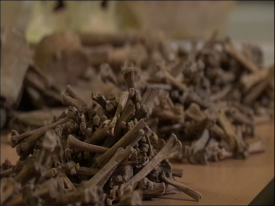
Preventive Archaeology takes place on
sites that are in danger of disappearing due to any type of architectural or
engineering work. Public works in the area around the English town of
Cannington allowed archaeologists to hold a dig in summer 2014, which will
bring to light the remains of three Roman buildings; the constructions formed
part of a luxury villa from the Roman period. Together with this,
identification of levels from the Iron Age and medieval period will make it
possible to offer a complete overview of the historical development of the
site.
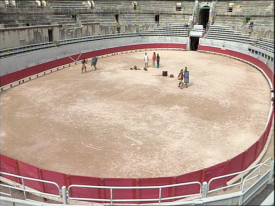
It was Julius Caesar who gave the name
Gaul to the group of territories that he conquered between 58 and 51 B.C.
Gallo-Roman civilisation developed during two centuries of peace, filling the
new provinces with amphitheatres, forums and temples located in cities. And
when we say city, we also mean citizens, a concept that developed alongside the
integration of the Gauls into the Empire.
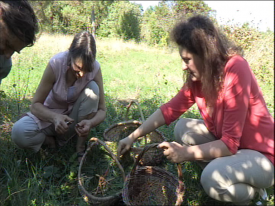
The Neolithic period brought about a major change in
the Palaeolithic populations of the Middle East, through the adoption of
agriculture and stockbreeding. The Hunter-Gatherer became a settled farmer and
the new lifestyle gradually spread to European populations. This documentary
forms part of a series which, with a clear intention of informing, presents the
most relevant French Archaeology.