


 Bidasoko Nazioarteko Zinemaldi Arkeologikoa
Festival Internacional de Cine Arqueológico del Bidasoa
Bidasoko Nazioarteko Zinemaldi Arkeologikoa
Festival Internacional de Cine Arqueológico del Bidasoa
Nova-WGBH
Films
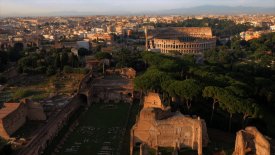
It seems difficult to believe that new information
about the Coliseum, one of the great architectural gems of Ancient Rome, can
still discovered at this stage. And yet this documentary shows exhaustive work
being carried out that gives us new knowledge about the monument that is
considered to be an example of the best artistic and constructive genius of the
Roman Empire. Archaeologists and historians join forces to re-investigate the
architecture and the use of this media tool for imperial power. Built in the
1st century A.D. by the Emperor Vespasian to legitimise the power of the new
dynasty, the Coliseum had unlimited resources to seduce the people of Rome.
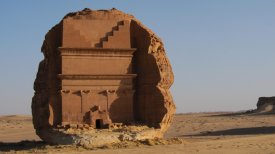
The city of Petra, which was the capital of a very
wealthy kingdom, that of the Nabataeans, continues to offer new discoveries.
Situated within the confines of three deserts, the Arabian Desert, the Syrian
Desert and the Negev Desert, it was absorbed by the Roman Empire at the
beginning of the Christian Era. During this period, a series of monuments
excavated from local stone was created, giving it a unique personality. It was
later abandoned and remained in the hands of the Bedouins, fading into
obscurity until its rediscovery in the 19th century. However, as this
documentary will demonstrate, Petra is part of a much wider cultural context,
thanks to which we are able to understand many of its specific features.
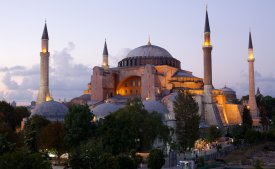
This documentary describes in great detail the
artistic and architectural personality of Hagia Sophia, a 6th century church
that is still standing, despite its location in an area subject to frequent
earth tremors and it having fallen into Muslim hands in the late 15th century.
Numerous computer graphics and 3D reconstructions make it possible to see the
main features of this monument.