


 Bidasoko Nazioarteko Zinemaldi Arkeologikoa
Festival Internacional de Cine Arqueológico del Bidasoa
Bidasoko Nazioarteko Zinemaldi Arkeologikoa
Festival Internacional de Cine Arqueológico del Bidasoa
Elhuyar Fundazioa
Details
- Contact: Beñar Kortabarria (b.kortabarria@elhuyar.com)
- Country: España
Films
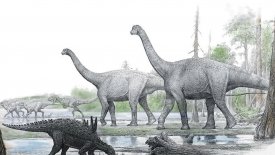
The Basque Country was dinosaur territory between 55 and 75 millionyears ago. Remains have been found in Álava, specifically in Treviño (inthe Lañu mine) and in Izki. We have visited the Lañu site. It is one of themost important dinosaur sites in Europe. A team of geologists and palaeontologistsfrom the University of the Basque Country – UPV/EHU haveidentified 40 species there, of which more than ten are dinosaurs, bothcarnivores and herbivores. And thanks to the bone remains of a herbivoredinosaur found in Lañu, a new species has been identified: LirainosauriusAstibiae. We’ll learn more about the era in which those dinosaurs lived.
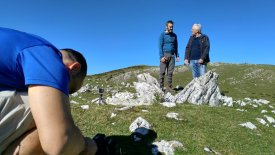
The Sierra de Aralar is an enclave especially rich in prehistorical
remains. In this report from the Teknopolis Programme, Professor of the University
of the Basque Country, Joxean Mujika, offers a tour of its most representative
remains, among which can be found dolmens, menhirs and cromlechs. As well as
getting to know these important megalithic constructions, we will discover the
latest finding made by archaeologists: a place inhabited around 5,000 years ago.
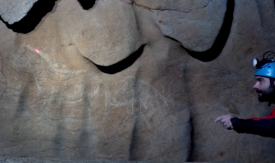
Mankind's oldest works of art are found in
Palaeolithic cave manifestations. Northern Spain is characterised by being one
of the richest areas in paintings and engravings from this period. Caves such
as Santimamiñe, Atxurra and Ekain, in the Basque Country, and Castillo cave, in
Cantabria, house an immense collection of artistic testimonies. Archaeologists
and speleologists strive to find works which have remained hidden for thousands
of years as they carefully study cave art.
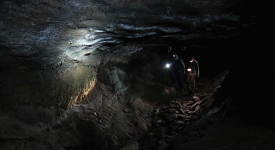
The Antxieta Archaeology group was created some fifty years ago in
Azpeitia. Since then, they have gone out every Sunday to prospect in the Urola
Valley, in search of new archaeological sites. Among their findings are
important enclaves of Basque Prehistory like Ekain cave, in which the
Paleolithic paintings were located for the first time in 1968. One of its
discoverers, Rafael Rezabal, tells us about this amazing discovery first-hand.
Educational
Section. Place: Conference Hall Amaia K.Z. (Irun)
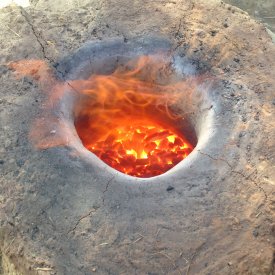
From
the Iron Age to the 14th century, iron was produced in hillside forges and
furnaces using just manual force. Hundreds of such forges have been catalogued
in the Basque Country and, although they have been described in detail, the
technique used in these furnaces is still not fully understood. In their search
to recover this former means of production, archaeologists are using
Experimental Archaeology and are reproducing the work process followed in the haizeola
furnaces.
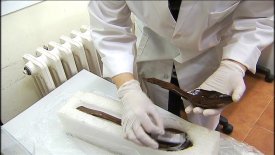
When out in the mountains or in natural areas, it is common to throw the
cores and stones of the fruit we eat on the ground, assuming that they
will simply biodegrade. And this is true more often than not. However,
if a series of highly specific environmental conditions are met, it is
possible for this organic matter to be preserved for hundreds of years.
One of the tasks of archaeologists and archaeobotanists of the Arkeolan
Foundation is to search for and study these materials in order to learn
about the diet, clothing and utensils of our ancestors.
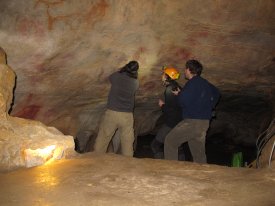
Scientific advances often have interesting
applications in the field of Archaeology. This is the case of new techniques
for analysing mitochondrial DNA, which can be carried out on human remains from
the past. In this case, the University of the Basque Country leads the
investigation into the Metal Ages skeletal remains of the Santimamiñe Cave,
relating them to the current population of Kortezubi.