


 Bidasoko Nazioarteko Zinemaldi Arkeologikoa
Festival Internacional de Cine Arqueológico del Bidasoa
Bidasoko Nazioarteko Zinemaldi Arkeologikoa
Festival Internacional de Cine Arqueológico del Bidasoa
Dalessandro, Massimo
Films
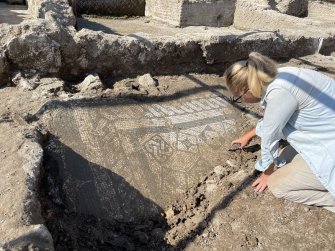
In the heart of central Italy, at the foot of the cliff of Orvieto, lies Campo della Fiera, an extraordinary place where sacredness and history have been intertwined for over two thousand years.Identified as the site of the legendary Fanum Voltumnae, a federal sanctuary of the Etruscans. The site then saw the passage of different eras, becoming a spiritual and administrative centreof the Romans and later a Franciscan settlement. Archaeological investigations conducted over the last twenty years have brought to light artefacts of inestimable value: ancient temples, mosaics, precious ceramics and a deep well that has never been explored, guardian of forgotten treasures. Through historical reconstructions, exclusive interviews and spectacularfilming, ‘Campo della Fiera and the Well of Time’ takes the audience on a fascinating journey to discover the life, decline and rebirth of this unique site. One of the artefacts found in thewell also opens a crack in the veil of mystery surrounding the Templars and a possible historical intrigue.
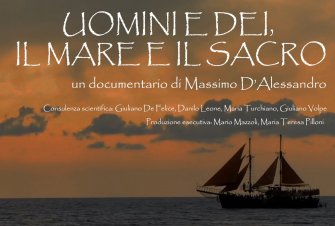
The caves on the islet of Sant'Eufemia, opposite the town of Vieste, hold a thousand-year-old secret: more than 200 rock inscriptions that tell forgotten stories. A precious heritage that from the Roman period to the contemporary age offers a fascinating glimpse into the lives of sailors who plied the dangerous waters of the Adriatic. But this cave was not just a shrine; it was asilent witness to centuries of life. Archaeological finds spanning nearly a thousand years of history emerge: ancient pottery, fragments of human bones. An extraordinary find that not only reveals a fragment of the history of this territory, but also invites us to reflect on the deep connection man has always had with the sea and its deities.
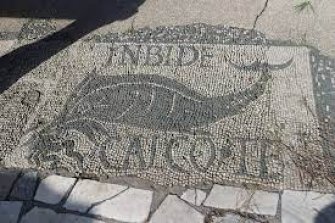
“Now we don’t like panels or spaces that stretch mountains into a room: here we start painting with stone”. So does Pliny testify to the introduction of a new decorative technique that was to become one of the most popular for paving and decorating imperial buildings, private residences and public facilities: the mosaic. And it is here in Portus, in a late antique thermal facility, that we will discover the long and complex restoration work carried out on a floor mosaic of one of the service areas of the baths. The recovery of an important archaeological asset and the telling of a model of integration that was one of the foundations of Roman society for centuries.